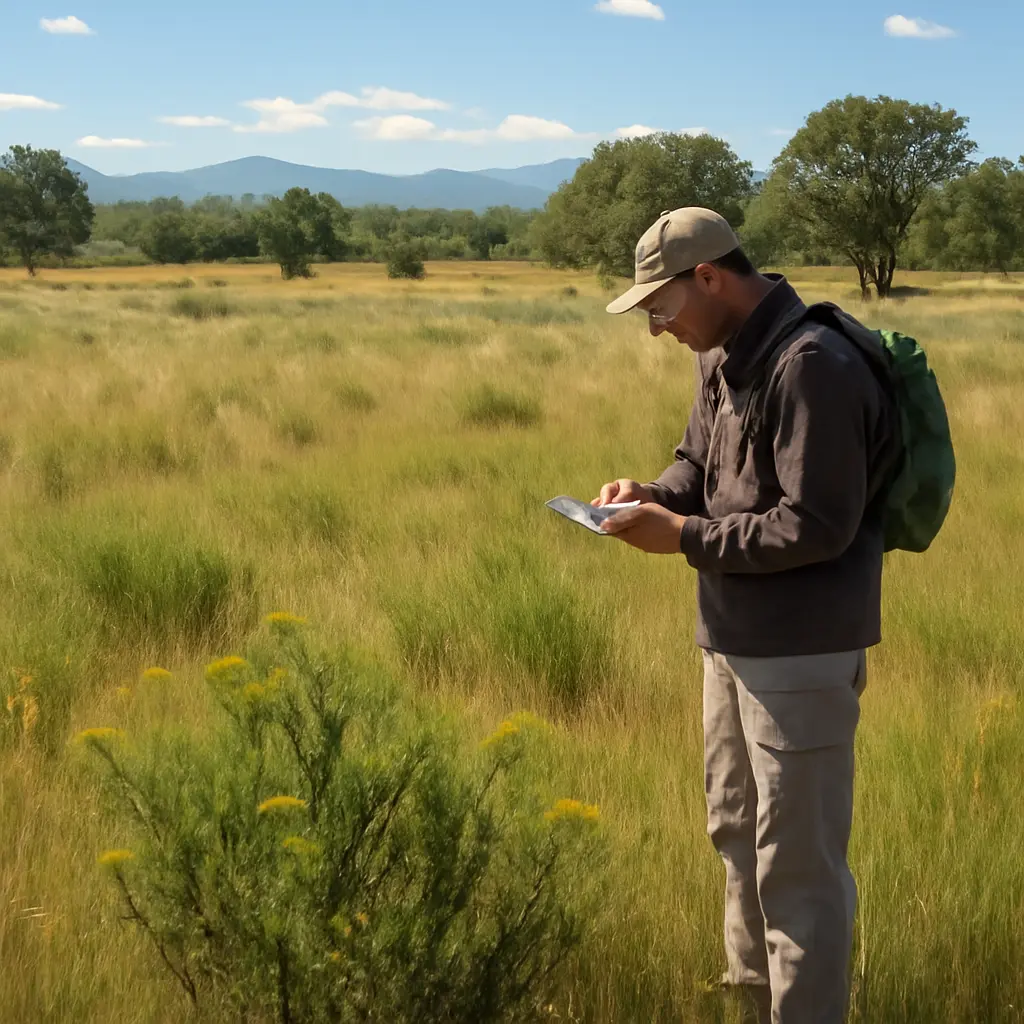
Indigenous land practices are place-based systems of knowledge and stewardship developed by Indigenous Peoples through long relationships with their territories. They are inspiring a new generation of environmental creators—artists, designers, filmmakers, writers, and community practitioners—to make work that connects ecological care with culture, responsibility, and justice. The United Nations estimates that Indigenous Peoples manage or hold tenure over at least 25% of the world’s land, areas that include much of its remaining biodiversity. From cultural burning and food-system renewal to collaborative art and land-based education, these practices offer powerful models—but they must be shared with consent, accurate attribution, and respect for Indigenous sovereignty.
Indigenous land stewardship practices and their defining principles
“Indigenous land practices” is an umbrella term rather than one universal method. It describes distinct, living systems through which Indigenous Peoples care for lands and waters, transmit knowledge, sustain relationships with other species, and exercise responsibilities grounded in particular places. The United Nations Food and Agriculture Organization (FAO) and Fund for the Development of the Indigenous Peoples of Latin America and the Caribbean (FILAC) describe Indigenous territories as vital to biodiversity conservation and climate resilience, while emphasizing that Indigenous Peoples’ rights and governance matter to those outcomes.
The scale is significant. The FAO and FILAC report, Forest governance by Indigenous and tribal peoples, estimates that Indigenous and tribal territories in Latin America contain about 28% of the region’s land and 35% of its forests. A 2021 study in Nature Sustainability estimated that Indigenous Peoples manage or have tenure rights over at least 25% of the global land surface. These figures describe different geographic scopes and measures, but together underline why land-based knowledge is relevant to conservation, climate policy, and creative practice.
Place-based knowledge and reciprocal responsibility
Place-based knowledge is knowledge shaped through sustained observation and relationship with a particular territory. It may include seasonal indicators, species behavior, water movement, harvesting protocols, and oral histories. The Intergovernmental Science-Policy Platform on Biodiversity and Ecosystem Services (IPBES) recognizes Indigenous and local knowledge as an important part of understanding biodiversity and supporting decision-making. It is not a single body of information freely available for extraction: knowledge can be community-held, restricted, sacred, or governed by protocols about who may learn and share it.
For environmental creators, reciprocity means treating the land and its knowledge holders as more than sources of visual inspiration. It involves asking who has authority to share a story, naming the community and context where appropriate, obtaining permission, and returning value through collaboration, compensation, or community-directed outcomes.
Cultural burning and fire stewardship
Cultural burning refers to intentional, carefully timed fire practices conducted by Indigenous fire practitioners for ecological, cultural, and community purposes. In Australia, the related practice of cultural burning is often described by Aboriginal practitioners as a form of caring for Country; terminology and methods differ among Nations. Low-intensity, patchy burns can support particular plants and animals, reduce accumulated fuels in some settings, and maintain culturally significant landscapes. Fire outcomes depend on local ecology, weather, and governance, so cultural burning should not be presented as a universal prescription.
The approach has prompted renewed collaboration among Indigenous fire practitioners, public agencies, and land managers. The U.S. Department of the Interior’s 2023 guidance on Indigenous Knowledge calls for federal agencies to respect Indigenous knowledge systems and work with Tribal Nations in ways consistent with sovereignty and applicable law. For creators, the key lesson is not simply that fire can be useful; it is that stewardship decisions are grounded in expertise, responsibility, and authority held by people connected to the land.
Food sovereignty, seed keeping, and habitat care
Food sovereignty is the right of peoples and communities to define and sustain their own food systems. In Indigenous contexts, it can connect seed keeping, harvesting, language, cultural practice, and the health of land and waters. Traditional food systems are highly diverse, reflecting local ecosystems and histories rather than one shared model. The FAO’s work on Indigenous food systems describes their contributions to biodiversity, cultural continuity, and community well-being.
Creators working with these themes can show how ecological restoration and cultural continuity intersect—for example, through community-led seed projects, the renewal of traditional harvesting areas, or locally governed food initiatives. They should avoid implying that a particular seed, food, or practice is public knowledge simply because it appears in a publication or collection. Community consent and control over cultural materials remain essential.
Together, these practices show that stewardship is not only a technical response to environmental change. It is also a relationship among people, place, and responsibility. That principle is shaping the ways a new generation of creators learns, collaborates, and communicates.
Environmental creators translating Indigenous stewardship into new work
Environmental creators include artists, designers, filmmakers, writers, educators, and other practitioners who use creative work to explore ecological relationships and public questions. Indigenous-led creative work may carry cultural responsibilities that cannot be separated from its artistic form; non-Indigenous creators, meanwhile, have a responsibility to avoid appropriation and to make space for Indigenous leadership. The strongest projects treat collaboration as an ongoing relationship, not a one-time consultation or aesthetic reference.
Land-based art and environmental storytelling
Land-based art uses a site, its materials, or its ecological and cultural relationships as part of the work. Environmental storytelling can communicate changes in a watershed, the return of a species, or the history of a place through film, photography, sound, writing, or public installation. Indigenous artists have long created work grounded in land and community; the contemporary opportunity is for institutions and audiences to support that work without detaching it from its context.
A 2023 report by the United Nations Educational, Scientific and Cultural Organization (UNESCO), Indigenous Peoples and the Climate Crisis: A UNESCO Perspective, discusses Indigenous knowledge, cultural expression, and climate action. For creators, such sources can help establish context, but they do not replace direct relationships with the relevant Indigenous community or permission to use its knowledge, imagery, or cultural materials.
Design, architecture, and material choices
Ecological design applies environmental principles to buildings, landscapes, products, and public spaces. Indigenous land practices can prompt designers to ask how a project responds to local climate, water, plants, and long-term care. This does not mean borrowing a community’s design motifs or presenting Indigenous knowledge as a generic sustainability toolkit. It means recognizing that place-specific design and Indigenous governance may offer important lessons—and that the people with rights and responsibilities in a place must help shape decisions about it.
The United Nations Declaration on the Rights of Indigenous Peoples affirms Indigenous Peoples’ rights to maintain, control, protect, and develop their cultural heritage, traditional knowledge, and cultural expressions. Designers and clients can put this principle into practice through early engagement, community-defined review processes, fair compensation, and agreements governing attribution and future use.
Digital media, mapping, and knowledge protection
Digital maps, documentaries, podcasts, and interactive projects can help audiences understand ecological change, but they can also expose sensitive sites or knowledge. Mapping a culturally important place, for instance, may create risks if access information is made public without permission. The CARE Principles for Indigenous Data Governance—Collective Benefit, Authority to Control, Responsibility, and Ethics—were developed by the Global Indigenous Data Alliance to support data practices that respect Indigenous rights and governance.
A responsible digital project therefore asks who controls the data, who benefits from publication, and whether information should be withheld or shared only under agreed conditions. These questions connect creative production with the broader issue of Indigenous sovereignty: representation is not responsible if communities lose control over their own knowledge.
Education and intergenerational practice
Land-based education connects learning with local ecology, community history, and practical responsibility. It may involve field observation, language learning, cultural burning, restoration, or harvesting, depending on the community and place. Environmental creators can support this work through community-led publications, youth media programs, or documentation projects designed and governed by participants.
The United Nations Permanent Forum on Indigenous Issues has repeatedly highlighted the importance of Indigenous languages, knowledge transmission, and self-determined education. A creative project that supports intergenerational learning should therefore be evaluated not just by audience reach, but by whether it strengthens community priorities and leaves control of cultural knowledge with its rightful holders.
These creative approaches are most meaningful when their methods are accountable. A practical distinction is between learning from Indigenous leadership and simply using Indigenous identity or imagery to make a project appear more environmentally credible.
Ethical collaboration and Indigenous-led environmental creation
Ethical collaboration is a process in which Indigenous partners help determine a project’s purpose, methods, authorship, permissions, benefits, and limits. It recognizes that Indigenous Peoples are not merely stakeholders or subjects: they are rights holders with distinct legal, cultural, and political relationships to their lands and knowledge. The United Nations Declaration on the Rights of Indigenous Peoples, adopted by the UN General Assembly in 2007, provides an international framework for these rights, including participation in decisions affecting Indigenous Peoples and the protection of cultural knowledge.
Free, prior, and informed consent
Free, prior, and informed consent (FPIC) is a process for seeking agreement without coercion, before a proposed activity begins, and with clear information about its scope and potential effects. The FAO describes FPIC as central to respectful engagement with Indigenous Peoples. In creative work, consent may be needed for interviews, images, recordings, site access, stories, and the circulation or commercial use of materials. A signed release does not automatically resolve collective authority, cultural restrictions, or community protocols.
Attribution, compensation, and shared benefit
Attribution makes clear whose knowledge, labor, or creative contribution informs a project. Compensation recognizes time and expertise, while benefit-sharing ensures that value generated by a project can reach the people and communities who contributed to it. These arrangements should be discussed at the outset rather than after a project has gained attention or revenue. Depending on the work, they may include co-authorship, licensing fees, honoraria, community access to materials, paid training, or funding for locally chosen priorities.
Avoiding appropriation and extractive storytelling
Cultural appropriation occurs when cultural expressions or knowledge are used without appropriate permission, context, or accountability. Extractive storytelling similarly takes images or narratives while leaving the people represented without meaningful control or benefit. Creators can reduce these risks by seeking guidance from the relevant Indigenous authority, clarifying what cannot be shared, crediting contributors as they wish to be credited, and allowing communities to review material for safety and cultural protocol. If permission is not available, the responsible choice may be not to publish.
Conclusion: Indigenous land practices and the future of environmental creativity
Indigenous land stewardship encompasses diverse, place-specific practices grounded in knowledge, relationship, and responsibility. Its influence is visible in cultural burning, food sovereignty, land-based art, ecological design, digital media, and intergenerational education. Research cited by the FAO, FILAC, and Nature Sustainability underscores the global importance of Indigenous territories to forests and biodiversity, while the UN Declaration on the Rights of Indigenous Peoples makes clear that respect for rights and self-determination must accompany any engagement with Indigenous knowledge.
For the next generation of environmental creators, the call to action is practical: learn from Indigenous-led sources, build relationships before proposing a project, obtain consent, share benefits, protect sensitive knowledge, and support Indigenous authority over land and culture. Further reading can begin with the FAO and FILAC’s forest-governance report, the UNESCO climate-crisis perspective, the CARE Principles for Indigenous Data Governance, and the United Nations Declaration on the Rights of Indigenous Peoples.
Sources: Garnett, S. T. et al., “A spatial overview of the global importance of Indigenous lands for conservation,” Nature Sustainability, 2021, https://doi.org/10.1038/s41893-019-0346-8; Food and Agriculture Organization of the United Nations and Fund for the Development of the Indigenous Peoples of Latin America and the Caribbean, Forest governance by Indigenous and tribal peoples: An opportunity for climate action in Latin America and the Caribbean, 2021, https://www.fao.org/3/cb2953en/cb2953en.pdf; Intergovernmental Science-Policy Platform on Biodiversity and Ecosystem Services, Global Assessment Report on Biodiversity and Ecosystem Services, 2019, https://ipbes.net/global-assessment; U.S. Department of the Interior, Guidance for Federal Departments and Agencies on Indigenous Knowledge, 2023, https://www.doi.gov/sites/doi.gov/files/doi-indigenous-knowledge-guidance-2023.pdf; Food and Agriculture Organization of the United Nations, Indigenous Peoples’ food systems: Insights on sustainability and resilience from the front line of climate change, 2021, https://www.fao.org/documents/card/en/c/cb5131en; United Nations Educational, Scientific and Cultural Organization, Indigenous Peoples and the Climate Crisis: A UNESCO Perspective, 2023, https://unesdoc.unesco.org/; United Nations General Assembly, United Nations Declaration on the Rights of Indigenous Peoples, 2007, https://www.un.org/development/desa/indigenouspeoples/declaration-on-the-rights-of-indigenous-peoples.html; Global Indigenous Data Alliance, CARE Principles for Indigenous Data Governance, 2019, https://www.gida-global.org/care; Food and Agriculture Organization of the United Nations, Free, Prior and Informed Consent: An Indigenous Peoples’ Right and a Good Practice for Local Communities, 2016, https://www.fao.org/3/i6190e/i6190e.pdf; United Nations Permanent Forum on Indigenous Issues, Indigenous Peoples, Indigenous Knowledge and the Protection of Indigenous Heritage, https://www.un.org/development/desa/indigenouspeoples/