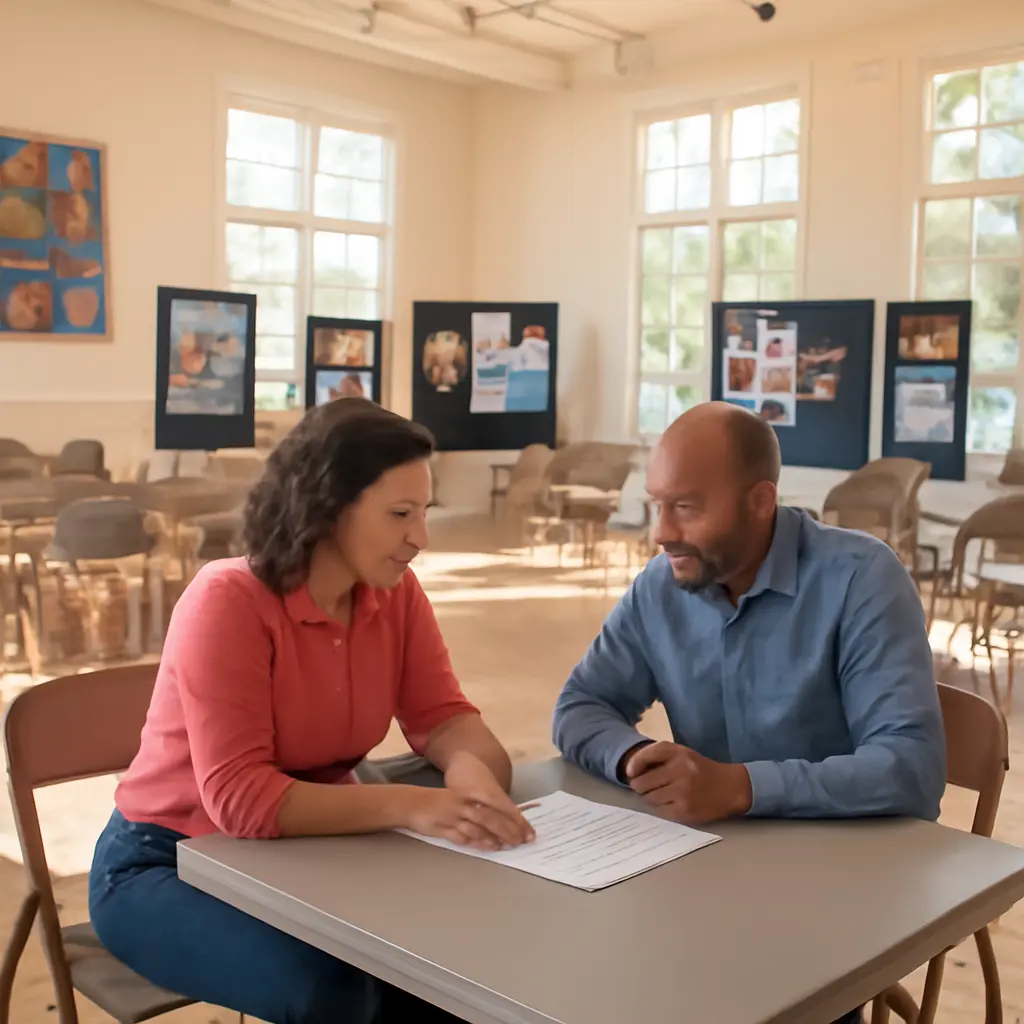
A cultural series is a recurring program of events that shares cultural expression, knowledge, or practice with a community—for example, a monthly film screening, artist talk, heritage workshop, or neighborhood music performance. Starting one sustainably means choosing a modest, clear format, building it with community partners, and protecting staff capacity through realistic schedules, defined roles, and feedback. That approach matters: Americans for the Arts’ Arts & Economic Prosperity 6 study found that nonprofit arts and culture organizations generated $151.7 billion in economic activity in 2022, while also emphasizing the importance of local participation and organizational capacity. A successful first series is not the busiest one; it is the one people value and staff can keep delivering.
Plan a Cultural Series Around a Clear, Manageable Purpose
A cultural series is best understood as a sequence of related public experiences rather than a collection of unrelated events. The National Endowment for the Arts describes arts participation broadly, including attending, making, and learning about art; this offers a useful planning lens because a series can invite audiences to experience culture in more than one way. For a first season, define the audience, cultural focus, intended benefit, and number of sessions before booking venues or performers.
The scale of cultural participation makes the opportunity meaningful, but it does not mean a new program needs a large production. The NEA’s 2022 Survey of Public Participation in the Arts reported that 48 percent of U.S. adults attended at least one arts or cultural event in person during the prior year. A small, well-designed program can therefore serve an existing public interest without attempting to reach everyone at once.
Choose a focused theme and a feasible format
A theme gives the series coherence; a format determines what participants actually do. Examples include a three-part local history conversation, a seasonal foodways workshop, a monthly documentary screening with discussion, or a short performance series featuring artists from one community. Hyponyms of the broader cultural-series concept include lecture series, workshop series, screening series, performance series, and intergenerational programs. Choose one primary format for the pilot rather than combining several resource-intensive formats in every session.
Write a one-sentence purpose, such as: “This four-session series introduces residents to local Indigenous artists through talks and hands-on learning.” Then set boundaries: session length, audience size, season, and what the program will not attempt. The Americans for the Arts’ Arts & Economic Prosperity 6 research estimated that nonprofit arts and culture organizations supported 2.6 million jobs in 2022. That sector-wide figure underscores the value of cultural work, but it is not a reason to overbuild a pilot; a clear, bounded concept is easier to staff, explain, and evaluate.
Set success measures before launch
A pilot needs a few measures that reflect its purpose, not a long list of metrics that creates extra administrative work. Track registrations and attendance, participant feedback, accessibility needs met, partner experience, and staff hours. If the goal is relationship-building, include a simple question about whether attendees would return or recommend the program. If the goal is learning, ask participants to name one idea, artist, or practice they encountered.
The NEA’s participation research is useful for understanding national patterns, but local evaluation should guide local decisions. A room with 25 engaged participants may be a stronger result than a larger audience that does not match the intended community. Establish a baseline and a review date so the team can decide whether to repeat, revise, or pause the series.
Build Community Partnerships Before Adding Production Work
Community partnership is a working relationship in which cultural practitioners, community organizations, or residents share influence over program design and delivery. It is more than asking someone to perform or promote an event. The National Endowment for the Arts’ Our Town program frames creative placemaking around arts, culture, and design working with local partners to shape community life. For a first series, that principle can be applied at a manageable scale: invite partners early, compensate expertise where possible, and agree on responsibilities together.
Invite cultural knowledge holders into planning
A cultural knowledge holder may be an artist, historian, language keeper, faith leader, educator, or community organizer whose experience is relevant to the series. Ask what should be represented, what needs context, and what practices or stories should not be presented publicly. This helps avoid treating culture as a decorative theme and makes the program more accurate and respectful.
Create a written agreement covering the scope of work, fee, travel, equipment, permissions, cancellation terms, and how recordings or photographs may be used. The agreement should also clarify who handles introductions, interpretation, and participant questions. These practical details reduce last-minute requests and show that community expertise is part of the program’s value, not an unpaid add-on.
Share outreach and audience relationships
A partner can help shape outreach language, identify trusted communication channels, and advise whether registration requirements create barriers. Provide ready-to-use descriptions, images with permission, dates, and accessibility information, while allowing partners to adapt the message for their audiences. Avoid assuming that one partner can guarantee attendance; outreach works best when responsibility is shared and expectations are realistic.
The Urban Institute’s cultural participation research has highlighted how access, relevance, and relationships influence who participates in arts and culture. In practice, this means considering transportation, cost, language, timing, childcare, and whether the venue feels welcoming—not simply counting promotional impressions. Offer free or low-cost entry when feasible and explain any registration limits clearly.
Protect Staff Capacity With a Repeatable Operating Model
Staff capacity is the time, skills, authority, and operational support available to deliver a program without undermining other responsibilities or staff well-being. A cultural series becomes risky when event-day visibility hides the hours spent on contracting, marketing, access coordination, room setup, follow-up, and evaluation. The U.S. Surgeon General’s Framework for Workplace Mental Health and Well-Being identifies protection from harm, connection and community, work-life harmony, mattering, and growth as foundations of workplace well-being. Applied to program planning, these principles support clear workload limits, adequate preparation time, and shared ownership.
Use a short pilot and a standard production checklist
A pilot is a limited first run designed to test audience interest and operational effort before committing to a longer season. Start with three or four sessions across a defined period, then review the results. A standard checklist should cover venue booking, contracts, access needs, promotion, registration, equipment, staffing, event-day roles, payment processing, and post-event communication.
Reuse templates for event descriptions, run-of-show documents, speaker confirmations, and feedback forms. Repetition lowers avoidable setup work, while a shared calendar makes deadlines visible. Set a cutoff date for additions: new elements introduced after that point should replace existing work or receive additional resources rather than simply being placed on top of the team’s workload.
Define roles, hours, and decision rights
Every session should have an accountable lead, but that does not mean one person does everything. Assign distinct owners for program content, logistics, communications, accessibility, and budget approvals. Estimate staff hours for each task and include preparation and follow-up—not just time spent in the room.
Set an explicit capacity ceiling, such as a maximum number of sessions, a fixed weekly hour allocation, or a limit on concurrent projects. Give the program lead authority to decline late additions and identify who can make decisions when a partner, venue, or performer changes plans. The National Council of Nonprofits’ guidance on nonprofit financial management stresses aligning resources with mission and monitoring budgets; the same discipline applies to labor. Staff time is a resource that should be planned and reviewed alongside cash expenses.
Budget for the full cost of participation
A realistic cultural-series budget includes more than artist fees and room rental. Consider interpretation, captioning, accessible materials, transportation support, equipment, insurance, childcare, refreshments, marketing, and staff hours. If a cost cannot be covered, decide early whether to reduce the program’s scope, secure a partner contribution, or seek funding; do not assume staff can absorb the gap through unpaid overtime.
Americans for the Arts’ Arts & Economic Prosperity 6 reported that audiences spent an average of $38.46 per person per event beyond admission, such as on meals, parking, or transportation. This national average is not a local budget forecast, but it illustrates that attending an event can involve additional costs for participants. Offering clear transit information, low-cost access, and advance notice can make participation more attainable.
Make Access, Evaluation, and Continuity Part of the Design
Accessibility is the practice of removing physical, communication, financial, and social barriers so people can participate meaningfully. Treat it as a design requirement from the start rather than an event-day correction. The National Endowment for the Arts’ accessibility resources encourage organizations to consider access in planning, communication, facilities, and program delivery.
Plan accessible participation from the beginning
Publish practical details in plain language: entrance and seating information, transit and parking options, event duration, sensory conditions, language access, and how to request accommodations. Ask artists and partners whether the format needs interpretation, captions, microphones, step-free access, or quiet space. Make the request process straightforward and identify a staff contact who can respond.
Access decisions affect both audience experience and workload. Booking an accessible venue and arranging interpretation early is usually more manageable than trying to solve those needs immediately before an event. Build the relevant costs and lead times into the checklist and budget.
Evaluate lightly, then choose what happens next
A useful evaluation combines basic counts with short, open-ended feedback. After each session, record attendance, no-shows, staff hours, direct costs, access requests, and any operational issues. Ask participants what they valued and what would make the next session more useful. Ask staff and partners what should be repeated, changed, or stopped.
At the end of the pilot, compare results with the original purpose and capacity ceiling. Continue if the program is valued and resourced; revise if the idea is strong but the format or schedule is too demanding; pause if the organization cannot support it responsibly. A short review meeting and one-page summary can preserve learning without turning evaluation into a separate major project.
Conclusion: Start Small, Share Ownership, and Sustain the Work
A sustainable first cultural series begins with a focused purpose and a modest pilot, builds genuine partnerships with cultural knowledge holders, and protects staff capacity through clear roles, realistic budgets, and repeatable processes. Accessibility and evaluation belong in the design from the beginning, while a deliberate review determines whether to continue, revise, or stop. Cultural programs can strengthen connection and participation, but their lasting value depends on respecting both community expertise and the people doing the work. Choose one clear idea, invite partners into planning, set a firm capacity limit, and test the series before expanding it.
Sources: National Endowment for the Arts, 2022 Survey of Public Participation in the Arts, https://www.arts.gov/impact/research/arts-data-profile-series/adp-31; Americans for the Arts, Arts & Economic Prosperity 6, https://www.americansforthearts.org/by-program/reports-and-data/research-studies-publications/arts-economic-prosperity-6; National Endowment for the Arts, Our Town, https://www.arts.gov/initiatives/our-town; Urban Institute, Understanding the Landscape of Arts and Culture, https://www.urban.org/policy-centers/center-nonprofits-and-philanthropy/projects/arts-and-culture; U.S. Surgeon General, Framework for Workplace Mental Health and Well-Being, https://www.hhs.gov/surgeongeneral/priorities/workplace-well-being/index.html; National Council of Nonprofits, Financial Management, https://www.councilofnonprofits.org/running-nonprofit/administration-and-financial-management/financial-management; National Endowment for the Arts, Accessibility, https://www.arts.gov/impact/accessibility