Indigenous knowledge keepers are the people and communities who sustain, teach, and renew knowledge rooted in their relationships with specific lands, waters, languages, and histories. Their work preserves culture not as a frozen archive but as living practice: through language, oral histories, ceremony, ecological stewardship, art, and intergenerational teaching. UNESCO estimates that at least 40 percent of the world’s approximately 7,000 languages are endangered—a reminder of what is at stake. This article explains how knowledge keepers carry culture forward, how that knowledge is safeguarded and adapted, and why community authority and consent matter.
Knowledge keepers preserve culture through living knowledge systems
“Indigenous knowledge” does not have one universal definition that fits every people. The United Nations Permanent Forum on Indigenous Issues describes it as knowledge systems developed by Indigenous peoples through long-standing relationships with their environments and passed between generations. Knowledge keepers may include Elders, language teachers, healers, artists, harvesters, storytellers, and other people recognized by their communities for particular responsibilities. Their authority comes from community relationships and practice, not simply from holding a formal title.
These knowledge systems connect language, identity, law, spirituality, livelihood, and place. They can include detailed observations of seasonal change, rules for harvesting, family histories, songs, and protocols governing when knowledge may be shared. The United Nations Declaration on the Rights of Indigenous Peoples affirms Indigenous peoples’ rights to maintain, control, protect, and develop their cultural heritage, traditional knowledge, and traditional cultural expressions.
Language and oral tradition
Language carries concepts, relationships, and ways of interpreting the world that may not translate neatly into another language. Oral traditions—including stories, songs, genealogies, and spoken histories—can transmit place-based knowledge and ethical responsibilities alongside vocabulary. UNESCO’s language figures show the scale of the challenge: at least 40 percent of the world’s roughly 7,000 languages are endangered. The exact status of a language varies, but language revitalization led by communities can help reconnect generations with cultural knowledge.
Land-based knowledge and stewardship
Land-based knowledge is learned through sustained relationships with particular territories and waters. It may encompass knowledge of plants, animals, weather, fire, soils, and the timing and limits of harvesting. The Intergovernmental Science-Policy Platform on Biodiversity and Ecosystem Services (IPBES) reports that Indigenous peoples manage or hold tenure rights over at least a quarter of the world’s land surface, areas that include many places of high biodiversity. This figure does not mean all such lands are managed in the same way; it underscores why Indigenous rights and expertise are important to discussions of conservation.
Ceremony, arts, and community responsibilities
Ceremonies, carving, weaving, dance, foodways, and other cultural expressions can preserve knowledge through repeated practice. They may teach histories, social responsibilities, relationships to place, and standards of care. Some teachings are intended for public sharing; others are restricted by community protocols, season, role, or circumstance. Respectful preservation therefore means supporting the people who hold and transmit knowledge—not assuming that every story, image, recording, or design should be publicly accessible.
Knowledge keepers transmit culture across generations
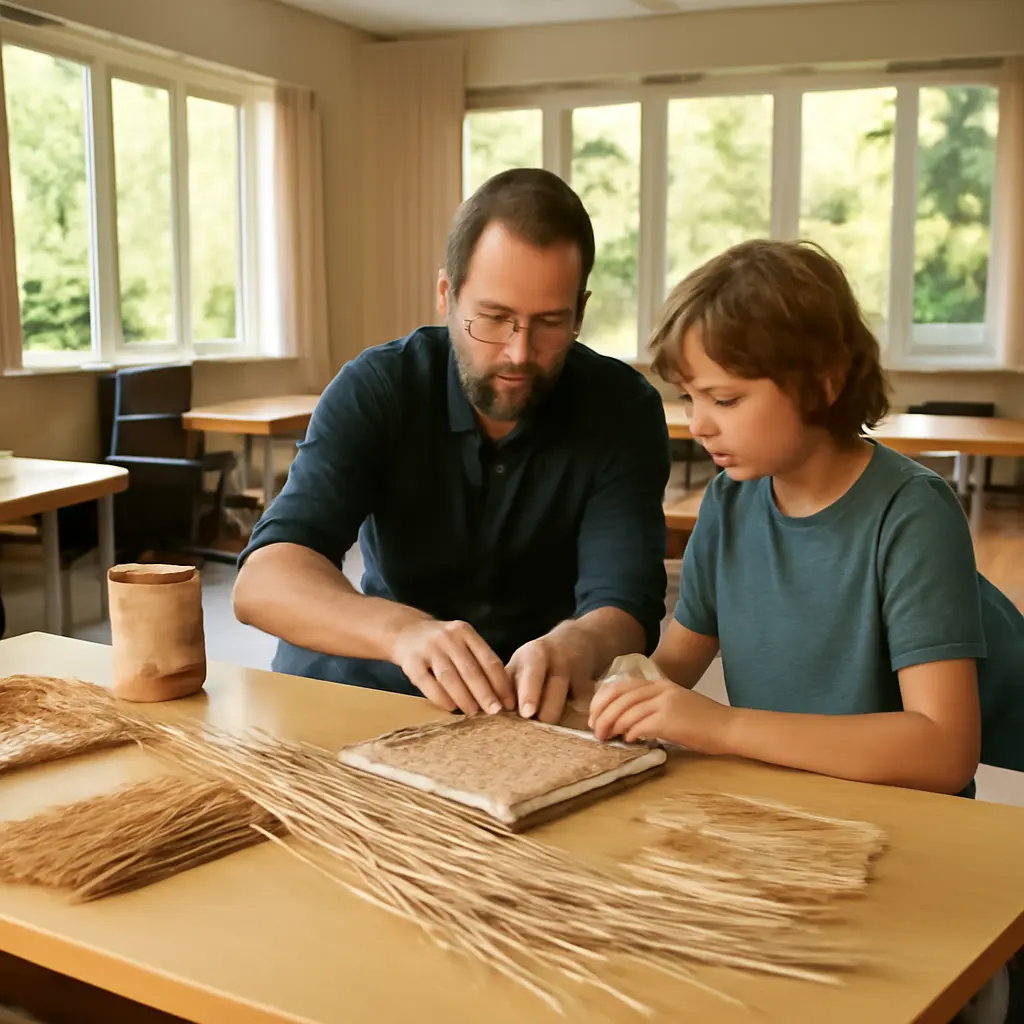
Cultural transmission is the process through which knowledge, skills, values, and responsibilities pass between people and generations. In Indigenous communities, it often happens through relationships and participation rather than through a single institution. A young person may learn a language by speaking with relatives, a harvesting practice by joining an experienced family member, or a craft by observing and practicing under a teacher’s guidance. These methods link knowledge to context and responsibility.
Learning through family and community
Families and community networks provide everyday settings for learning names, protocols, histories, and practical skills. Elders and other knowledge holders may teach through conversation, demonstration, correction, and shared work. This form of learning can preserve details that are difficult to capture in a textbook, such as how a practice changes with local conditions or why a particular protocol matters.
Language nests, immersion, and community-led education
Language nests and immersion programs create environments where children and adults can learn Indigenous languages through sustained use. Community-led schools, camps, and cultural programs may combine language learning with land-based activities, arts, and local history. UNESCO identifies education in learners’ mother tongues as valuable for learning and cultural continuity. For Indigenous language programs, community leadership is especially important because communities determine which language varieties, teaching practices, and cultural protocols belong in the curriculum.
Intergenerational teaching and renewal
Intergenerational teaching is not only the transfer of inherited knowledge; it also gives younger people opportunities to ask questions, practice, and contribute. Cultural knowledge can adapt as communities respond to migration, changing environments, new technologies, and shifts in daily life. Renewal does not make a tradition less authentic. Rather, communities decide how knowledge should continue and what forms of teaching are appropriate for new circumstances.
Community control protects knowledge from misuse
Preservation can create risks when institutions collect or publish knowledge without community consent. Recordings, photographs, biological samples, designs, and stories may be taken out of context, used commercially, or shared despite restrictions. The United Nations Declaration on the Rights of Indigenous Peoples provides an international framework affirming rights related to cultural heritage and traditional knowledge. The CARE Principles for Indigenous Data Governance—Collective Benefit, Authority to Control, Responsibility, and Ethics—also emphasize that Indigenous data practices should reflect Indigenous peoples’ rights and interests.
Consent, protocols, and access
Responsible documentation begins with asking who has the authority to approve recording, storage, interpretation, and future use. Consent should be meaningful and ongoing, with clear agreements about who can access materials, whether they may be copied or published, and how communities can change or withdraw permission. A public archive is not automatically a culturally appropriate archive; some materials may need restricted access or community-controlled stewardship.
Digital archives and Indigenous data governance
Digital tools can support language learning, preserve recordings, and connect dispersed community members. They can also make sensitive material easier to copy and circulate beyond its intended audience. The CARE Principles, developed by the Global Indigenous Data Alliance, complement data-management approaches that focus mainly on openness by centering collective benefit, control, responsibility, and ethics. Communities may choose to keep resources online, limit access, or prioritize face-to-face teaching; the appropriate choice is theirs.
Cultural intellectual property and attribution
Conventional copyright systems do not always fit collective, intergenerational cultural knowledge. Researchers, museums, educators, and businesses should therefore work with communities to establish attribution, permissions, benefit-sharing, and limits on reuse. The World Intellectual Property Organization has documented ongoing international work on intellectual property and traditional knowledge. Practical safeguards include community-designed agreements, accurate attribution, and recognition that some knowledge should not be commercialized or reproduced.
Knowledge keepers contribute to cultural continuity and resilience
Cultural continuity supports identity, belonging, and the ability to pass responsibilities forward. Knowledge keepers also contribute to broader public understanding, including in biodiversity stewardship and climate adaptation. IPBES assessments recognize Indigenous and local knowledge as important to understanding biodiversity and change. Such knowledge should not be treated as a resource available for outside extraction: collaboration requires respect for Indigenous rights, leadership, and the distinct knowledge systems involved.
A practical example: Indigenous fire stewardship
In parts of Australia, Indigenous fire practitioners use cultural burning informed by local knowledge, seasonal cues, and responsibilities to Country. These practices vary among peoples and places; they are not a single universal technique. Research and public land-management programs have increasingly examined how Indigenous fire knowledge can inform contemporary fire planning. The example illustrates why effective collaboration must involve Indigenous practitioners in decision-making and recognize their authority, rather than extracting a technique and separating it from its cultural context.
Barriers and ways to support knowledge holders
Language loss, displacement, restricted access to traditional lands, underfunded community programs, and the effects of colonization can disrupt transmission. Support is strongest when communities set priorities and control resources. Governments, schools, museums, and researchers can help by funding language and cultural programs, supporting access to lands and waters, hiring and compensating knowledge holders, and following community protocols for research and documentation.
- Fund community-led language revitalization and intergenerational teaching.
- Recognize Indigenous rights, governance, and access to lands and waters.
- Seek informed consent and agree on access, attribution, storage, and reuse before documenting knowledge.
- Compensate knowledge holders fairly and share benefits from research or cultural projects.
- Support Indigenous-led archives and follow community decisions about what remains private.
Conclusion: preserving living knowledge means supporting its keepers
Indigenous knowledge keepers preserve culture through language, oral traditions, land-based practice, ceremony, arts, and intergenerational relationships. UNESCO’s estimate that at least 40 percent of the world’s languages are endangered highlights the urgency of sustaining language and cultural transmission, while IPBES findings underline the importance of Indigenous stewardship and knowledge to biodiversity discussions. Yet preservation is not simply a matter of recording information: it depends on Indigenous peoples’ authority to teach, adapt, protect, and govern their knowledge.
Readers, institutions, and policymakers can contribute by supporting community-led programs, respecting consent and cultural protocols, and recognizing Indigenous rights over knowledge and data. For further learning, explore resources from UNESCO, the United Nations Permanent Forum on Indigenous Issues, IPBES, and the Global Indigenous Data Alliance—and follow the guidance of the communities whose knowledge is being discussed.
Sources: UNESCO, “Languages in Education,” https://www.unesco.org/en/languages-education; United Nations Permanent Forum on Indigenous Issues, “Indigenous Peoples, Indigenous Voices: Factsheet,” https://www.un.org/esa/socdev/unpfii/documents/5session_factsheet1.pdf; United Nations, United Nations Declaration on the Rights of Indigenous Peoples, https://www.un.org/development/desa/indigenouspeoples/declaration-on-the-rights-of-indigenous-peoples.html; Intergovernmental Science-Policy Platform on Biodiversity and Ecosystem Services (IPBES), Global Assessment Report on Biodiversity and Ecosystem Services, https://ipbes.net/global-assessment; Global Indigenous Data Alliance, “CARE Principles for Indigenous Data Governance,” https://www.gida-global.org/care; World Intellectual Property Organization, “Traditional Knowledge,” https://www.wipo.int/en/web/traditional-knowledge; UNESCO, “Why Language Matters,” https://www.unesco.org/en/articles/why-language-matters; International Indigenous Fire Management Network, “Cultural Burning,” https://www.iifm.net.au/.