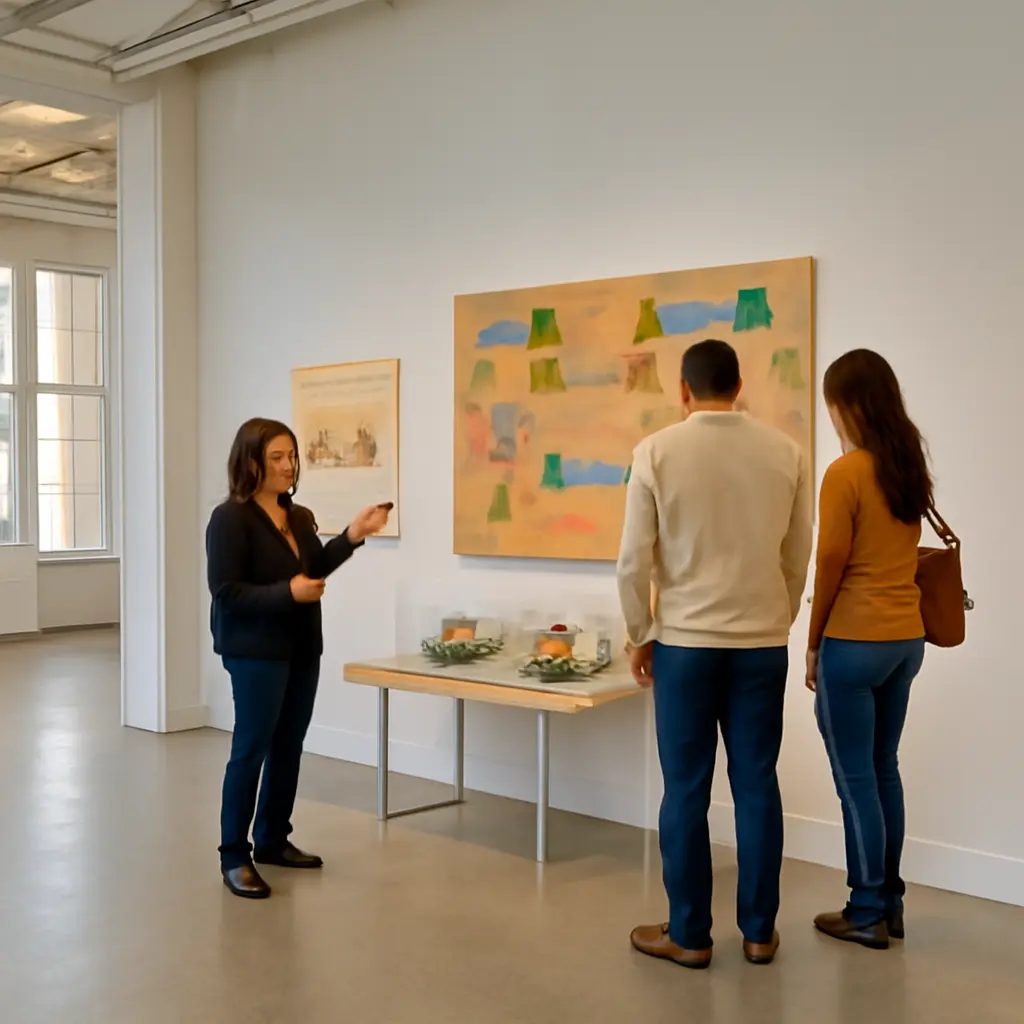
Community-led museum outreach is the work of building museum programs with, rather than merely for, the people they aim to serve. Its quiet power lies in relationships: local partners help shape what museums ask, share, and preserve, making outreach more relevant and participation more likely. Evidence from the American Alliance of Museums, the Institute of Museum and Library Services, and community-based museum projects points to a practical lesson: sustained partnerships, shared decision-making, and removal of access barriers can turn one-time visits into durable public connection.
Community-led outreach builds museum relevance through shared authority
Community-led museum outreach is a collaborative approach in which people connected to a place, identity, or lived experience help define museum priorities and shape activities. The International Council of Museums’ 2022 definition describes museums as institutions that research, collect, conserve, interpret, and exhibit heritage in partnership with communities; it also emphasizes accessibility, inclusion, diversity, and sustainability. In practice, community leadership means more than inviting residents to attend: it includes listening early, sharing choices, recognizing local expertise, and accounting for who benefits from the work.
This approach matters because museums operate within unequal patterns of access and trust. The Institute of Museum and Library Services’ 2021 Museum Universe Data File counted more than 35,000 U.S. museums, but the number alone says little about who feels welcome or whose stories are represented. The American Alliance of Museums’ 2022 National Snapshot of COVID-19 Impact found that many museums faced financial and staffing pressures after the pandemic, strengthening the case for partnerships that use resources thoughtfully and connect institutions to community priorities.
Shared authority is the defining characteristic
Shared authority means that community members have meaningful influence over decisions—not simply a chance to comment after plans are finished. Nina Simon, in The Participatory Museum, frames participation as a way for visitors and communities to contribute ideas, content, or leadership to cultural experiences. A museum applying this principle might compensate local advisers, co-curate an exhibition, or let a neighborhood organization set the format and location of a program. These choices make participation consequential and help avoid treating community knowledge as free material for institutional use.
Access is practical, cultural, and relational
Access includes more than admission price. Transportation, opening hours, language, disability accommodations, childcare, cultural safety, and the perceived relevance of museum content all affect participation. The American Alliance of Museums’ Facing Change: Insights from the American Alliance of Museums’ Diversity, Equity, Accessibility, and Inclusion Working Group emphasizes that equity requires institutions to examine organizational practices and barriers, not just diversify audiences. Community partners can identify obstacles a museum may overlook and help design realistic responses, such as neighborhood pop-ups, translated materials, or programs scheduled around local routines.
Community-led outreach improves participation through trusted partnerships
Trusted partnerships connect museums with organizations and individuals who already have relationships in a community. Libraries, schools, cultural associations, youth groups, disability advocates, tribal governments, and neighborhood leaders can help museums understand local priorities and communicate in credible ways. The partnership is strongest when it is reciprocal: museums contribute collections, expertise, space, or funding, while partners contribute insight, networks, and shared direction.
Co-designed programs make participation more relevant
Co-design is the process of developing a program with the people who will use or experience it. Instead of assuming what a community wants, museum staff ask partners to identify questions, formats, and measures of success. A school partnership, for example, might move beyond a standard gallery tour to create a local-history workshop shaped by teachers and students. The National Art Education Association and museum learning organizations have long emphasized the value of connecting museum experiences with classroom learning; community co-design makes that connection more responsive to local curricula and student interests.
Outreach beyond museum walls lowers participation barriers
Pop-up exhibitions, mobile programs, lending kits, and events hosted at community venues bring museum resources closer to people who may not visit a central building. The Smithsonian’s Anacostia Community Museum, founded in 1967 as a neighborhood museum in Washington, D.C., offers a longstanding example of connecting museum interpretation to local history and community concerns. Such work demonstrates that outreach is not merely promotion; it can also shift where interpretation happens and whose knowledge is visible.
Compensation and continuity make collaboration credible
Community expertise has value, so effective partnerships budget for honoraria, translation, transportation, childcare, and other participation costs where possible. Continuity matters too: a single consultation may generate ideas, but repeated contact gives partners time to build trust and see whether their input influenced decisions. Museums can make the relationship more accountable by agreeing on roles, timelines, decision rights, and how results will be reported back.
Community-led museum outreach can be evaluated through outcomes
Evaluation helps museums distinguish meaningful engagement from activity counts. Attendance and reach remain useful, but they should be paired with evidence about relevance, access, relationships, and influence. The American Alliance of Museums’ standards and evaluation resources encourage institutions to define intended outcomes and gather evidence that can guide improvement. In community-led work, evaluation itself should be shaped with partners so that success reflects what participants value.
Measure trust, relevance, and shared influence
Useful indicators include whether participants feel respected, whether content reflects their experiences, whether access barriers were reduced, and whether community recommendations changed a decision. Museums can combine short surveys with interviews, listening sessions, partner feedback, and records of changes made. A simple chart can compare these indicators across program cycles—such as trust, perceived relevance, repeat participation, and the proportion of partner recommendations adopted—without reducing a complex relationship to one attendance figure.
Use participation data carefully
Demographic and participation data can reveal who is missing, but collecting it requires transparency and care. Museums should explain why information is requested, minimize sensitive data, and avoid treating demographic categories as substitutes for listening. The Institute of Museum and Library Services’ museum data resources provide national context for the sector, while local partners can help interpret what attendance patterns mean in a specific place. Data is most useful when it prompts action—for example, changing hours or adding language access—rather than simply describing an audience.
A practical framework turns outreach into lasting community partnership
Museum teams can make community-led outreach more durable by treating it as an institutional practice rather than a one-off event. The following steps connect listening, shared design, delivery, and learning:
- Identify relevant community partners and ask what priorities they want to address.
- Agree on decision-making roles, resources, accessibility needs, and expectations before launching a project.
- Co-design the activity, including its location, language, format, and measures of success.
- Compensate expertise and communicate how community input shaped the final work.
- Review outcomes with partners, share findings, and decide together what should change next.
This framework applies across exhibitions, oral-history projects, school programs, collections work, and public events. It is particularly important when museums engage communities whose histories have been excluded, misrepresented, or collected without adequate consent. In those situations, relationship-building and clear agreements are not administrative extras; they are part of responsible interpretation.
Conclusion: community-led outreach strengthens museums and public life
Community-led museum outreach works when shared authority, practical access, trusted partnerships, and thoughtful evaluation reinforce one another. Museums that co-design programs, take resources beyond their walls, compensate community expertise, and report back can build relationships that are more relevant and accountable than one-time audience campaigns. The broader implication is that museums become stronger public institutions when communities help shape not only what is presented, but how decisions are made. Museum leaders and partners can start by choosing one program, inviting community members into its earliest planning stage, and agreeing together on what meaningful success will look like.
Sources: International Council of Museums, Museum Definition, 2022, https://icom.museum/en/resources/standards-guidelines/museum-definition/; Institute of Museum and Library Services, Museum Universe Data File, 2021, https://www.imls.gov/research-evaluation/data-collection/museum-universe-data-file; American Alliance of Museums, National Snapshot of COVID-19 Impact on United States Museums, 2022, https://www.aam-us.org/2022/03/15/national-snapshot-of-covid-19-impact-on-united-states-museums/; Nina Simon, The Participatory Museum, 2010, https://www.participatorymuseum.org/; American Alliance of Museums, Facing Change: Insights from the American Alliance of Museums’ Diversity, Equity, Accessibility, and Inclusion Working Group, 2018, https://www.aam-us.org/programs/diversity-equity-accessibility-and-inclusion/facing-change/; Smithsonian Institution, Anacostia Community Museum, History, https://anacostia.si.edu/About/History; American Alliance of Museums, Standards and Excellence Program, https://www.aam-us.org/programs/accreditation-excellence-programs/standards/