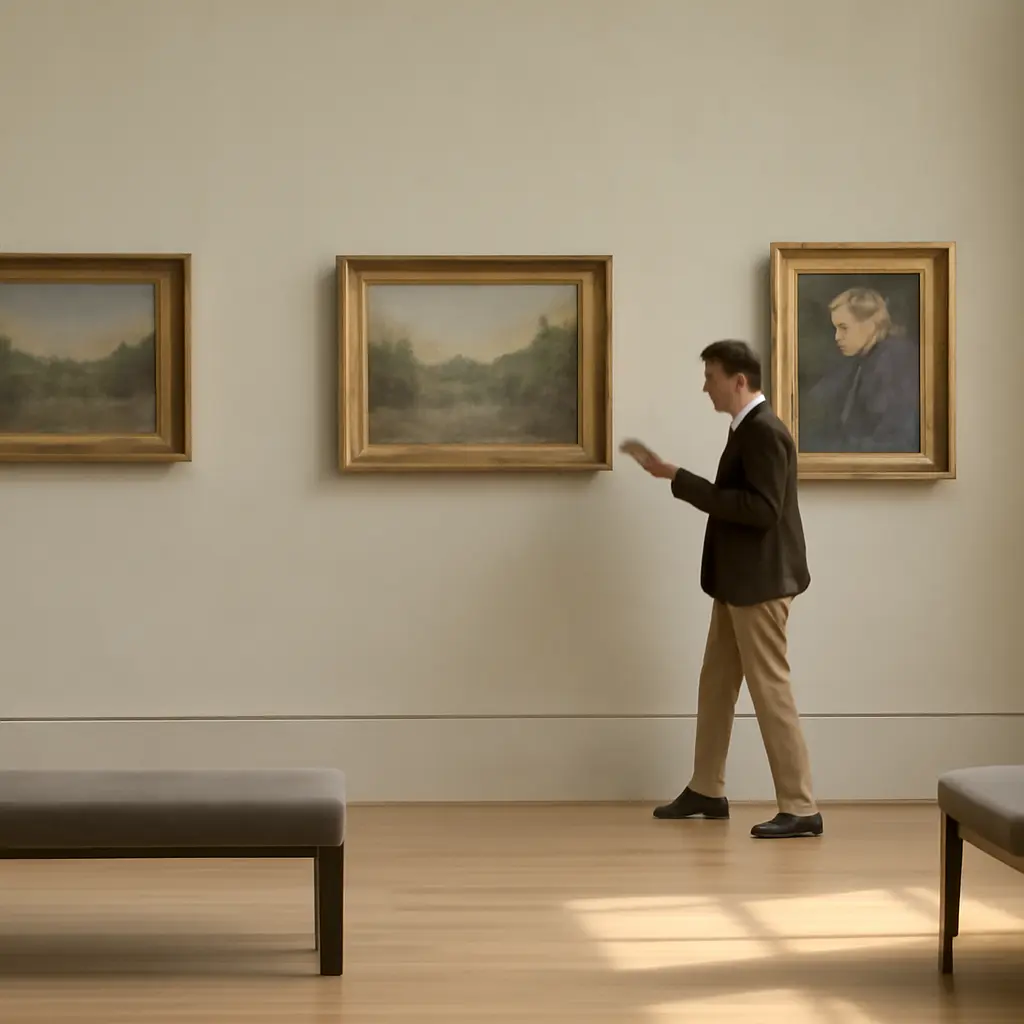
Museums are moving beyond the plain white gallery wall—not by replacing it with one new look, but by treating exhibition design as part of the interpretation. The shift includes colored and textured spaces, immersive installations, community-led displays, and more accessible ways to encounter collections. It is a response to changing ideas about whose stories museums tell and how visitors experience them, as well as a practical design choice: the Smithsonian’s National Museum of African American History and Culture, for example, uses a carefully sequenced architectural and exhibition experience to connect objects, history, and emotion. The change is not universal, and white walls remain useful; what is changing is the assumption that they are the neutral default.
What the white-wall shift means for museum exhibition design
The “white cube” is a gallery convention in which art is presented in a spare, often white-walled space with minimal visible context. Art critic Brian O’Doherty examined the convention in his 1976 essays later collected as Inside the White Cube, arguing that the gallery’s supposedly neutral setting shapes how viewers see and value art. The term describes an influential display model, not every museum’s architecture or every white room.
The current shift is better understood as a move from default neutrality toward deliberate interpretation. Museums increasingly choose wall color, lighting, text, sound, furniture, and digital media according to the collection, the story being told, and the needs of visitors. That can mean a deep-colored room for a particular set of paintings, a reconstructed historic interior, or a quiet, uncluttered gallery. The aim is not to decorate every room; it is to make design choices visible and purposeful.
Why white walls became the standard
White walls became closely associated with modern art display because they help separate works from surrounding architectural detail. A restrained setting can support careful looking, reduce visual competition, and accommodate changing exhibitions. This is especially useful when galleries show works with very different colors, sizes, and materials.
But a white room is not interpretation-free. Choices about spacing, lighting, labels, and which objects appear together influence a visitor’s reading of the work. O’Doherty’s critique remains relevant precisely because the blank-looking gallery can make its own conventions seem invisible. Contemporary exhibition design increasingly acknowledges that the room itself contributes to meaning.
What is changing—and what is not
The change is not a simple trend toward brighter colors or theatrical spaces. It is a broader willingness to use multiple display approaches: immersive environments, historically informed interiors, community-curated cases, accessible sensory design, and conventional galleries where that format best serves the objects. A museum may use several of these approaches in the same building.
There is no single statistic that measures how many museums have “ditched” white walls, and the phrase can overstate the scale of change. More useful evidence comes from museum practice: institutions are increasingly discussing audience inclusion, interpretation, accessibility, and the authority behind curatorial decisions. The American Alliance of Museums’ work on diversity, equity, accessibility, and inclusion, for instance, frames these issues as institution-wide responsibilities rather than matters of gallery color alone.
How changing museum displays reshape interpretation
Exhibition design is the planned arrangement of objects, space, text, and other sensory elements to help visitors encounter and understand a collection. The International Council of Museums’ 2022 definition describes museums as institutions that research, collect, conserve, interpret, and exhibit tangible and intangible heritage, while making them accessible and inclusive. In that framework, display is not a neutral container: it is one way museums interpret what they care for.
This makes the white-wall debate part of a larger conversation about context and institutional authority. A display can foreground an artwork’s formal qualities, or connect it to its maker, community, history, materials, and circumstances of acquisition. Different approaches suit different purposes, and thoughtful design makes those purposes clearer to visitors.
Immersive and sensory exhibition design
Immersive design uses elements such as large-scale imagery, sound, lighting, projection, or reconstructed spaces to create a more enveloping encounter. It can help visitors imagine a setting or follow a complex story, but it can also compete with original objects or encourage spectacle over close attention. The design question is not whether immersion is good or bad; it is whether the experience supports the exhibition’s aims and accurately represents its subject.
The National Museum of African American History and Culture in Washington, D.C., offers a notable example of narrative architecture and exhibition design working together. Its galleries guide visitors through historical material in a carefully structured sequence, while the building and displays connect individual objects to broader histories. The example shows that a designed visitor journey can deepen context without making every gallery look alike.
Community-led and contextual displays
Community-led interpretation involves people connected to a collection or subject in shaping how it is presented. This can include co-curation, consultation, shared authorship of labels, or placing objects alongside oral histories and contemporary perspectives. These methods challenge the idea that curatorial expertise belongs only to museum staff, while recognizing that collaboration requires time, trust, and clear decisions about who has authority.
The “Nothing About Us Without Us” approach, associated with disability-rights advocacy, has also influenced museums’ thinking about participation and access. Applied to exhibition-making, the principle supports involving people directly affected by a display’s subject or design. Contextual displays can therefore change not only what visitors see on the wall, but also who helps decide what the wall says.
Accessibility as part of exhibition design
Accessible design considers how visitors with different physical, sensory, and cognitive needs can navigate and understand an exhibition. Practical choices may include readable text, seating, clear routes, tactile or audio interpretation, captioning, and spaces where visitors can pause from intense sensory input. The Smithsonian Guidelines for Accessible Exhibition Design provide guidance on making exhibitions usable by a wider range of people.
Accessibility is not the opposite of visual richness. A dramatic room can still offer seating, clear wayfinding, and alternative ways to access information; a minimalist gallery can still be difficult to navigate or read. The key is to test design choices with visitors and treat access as part of the exhibition’s plan from the beginning, rather than as a last-minute addition.
What museums gain—and risk—when they move beyond white walls
A more varied approach can make galleries feel connected to the histories and communities represented in them. Color, materials, sound, and spatial arrangement can help establish context, support different learning styles, and signal that a collection is not detached from the world. These choices may also make exhibitions more memorable when they give visitors meaningful ways to connect objects with people and events.
The risks are real. Elaborate environments can distract from objects, overwhelm visitors, or create a simplified sense of historical authenticity. A strong visual concept can also become dated or expensive to maintain. Museums must weigh those concerns against the needs of conservation: light levels, humidity, construction materials, and visitor flow all affect the safety and care of collections.
How to judge whether a display choice works
A useful test is whether the design helps visitors understand the subject without hiding the choices behind it. Museums can evaluate exhibitions through visitor observation, interviews, accessibility reviews, and feedback from people whose histories or cultures are represented. They can also ask whether labels distinguish established evidence from interpretation and whether the display explains an object’s provenance when relevant.
- Does the room’s design support the objects and story, or compete with them?
- Can visitors with different access needs move through and engage with the exhibition?
- Are community perspectives included in ways that are clear and accountable?
- Can the design be maintained safely and adapted as knowledge changes?
These questions help distinguish purposeful interpretation from styling for its own sake. They also make clear why a well-designed white gallery can still be appropriate: the objective is not to eliminate a visual language, but to choose one consciously.
Conclusion: the museum wall is part of the story
Museums are not uniformly abandoning white walls. They are widening the range of ways exhibitions can connect objects, histories, communities, and visitors. The white cube remains useful for some art and some forms of close looking, but it is no longer the only model treated as neutral or universally suitable.
The larger change is a more explicit understanding of exhibition design as interpretation. Immersive spaces, community-led displays, and accessibility-focused choices can make museums more engaging and inclusive when they are grounded in evidence, collaboration, and care for collections. Visitors can look beyond a room’s appearance and ask whose perspective it presents, what context it provides, and who can take part in the experience. Museums, in turn, can involve those visitors and communities in shaping what comes next.
For further reading, explore the International Council of Museums’ definition of a museum, the Smithsonian’s accessible exhibition guidance, and Brian O’Doherty’s writing on the white cube. Together, they offer a useful starting point for understanding how gallery design shapes what museums communicate.
Sources: Brian O’Doherty, Inside the White Cube: The Ideology of the Gallery Space, University of California Press, 1999; International Council of Museums, “Museum Definition,” 2022, https://icom.museum/en/resources/standards-guidelines/museum-definition/; American Alliance of Museums, “Facing Change: Insights from AAM’s DEAI Working Group,” https://www.aam-us.org/programs/diversity-equity-accessibility-and-inclusion/; Smithsonian Institution, “Smithsonian Guidelines for Accessible Exhibition Design,” https://www.si.edu/accessibility/sgaed; National Museum of African American History and Culture, “Building the Museum,” https://nmaahc.si.edu/about/building-museum.