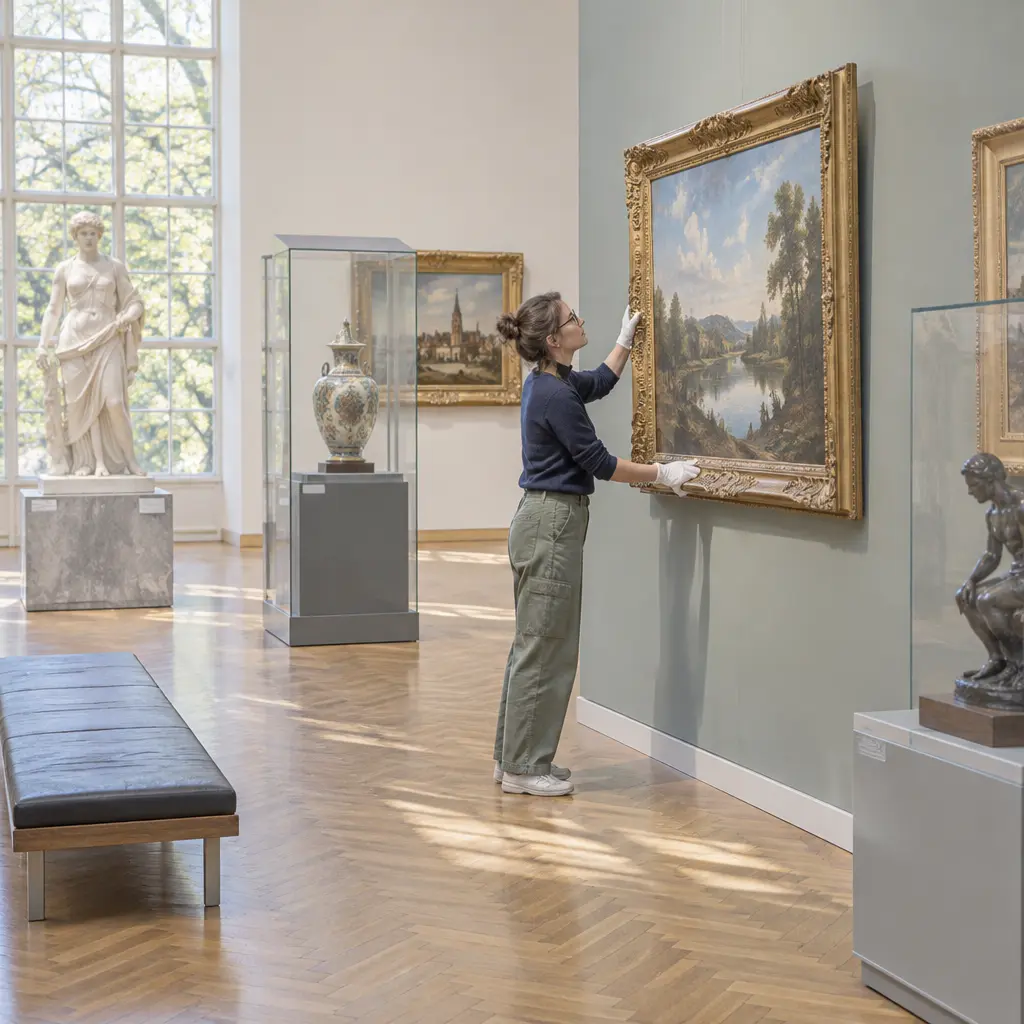
Museums protect art through layered security, carefully controlled environments, preventive conservation, emergency planning, and trained staff. The International Council of Museums (ICOM) defines a museum as an institution that researches, collects, conserves, interprets, and exhibits tangible and intangible heritage; protecting collections is therefore central to a museum’s purpose, not an optional extra. From managing light and humidity to deterring theft and preparing for floods or fire, these measures help preserve objects for future generations while allowing people to study and experience them.
Collection Protection: How Museums Safeguard Art
Collection protection is the coordinated work of preventing damage, loss, and deterioration to artworks and other holdings. The American Institute for Conservation (AIC) describes preventive conservation as measures that reduce risks to collections without necessarily treating an individual object. Those risks include theft, vandalism, fire, water, pests, pollution, poor handling, and unsuitable temperature, humidity, or light. Because no single safeguard can address every threat, museums combine physical security, environmental controls, conservation expertise, documentation, and emergency response.
Preventive Conservation
Preventive conservation means controlling the conditions around objects so that deterioration is less likely. It includes suitable storage and display, safe handling, integrated pest management, monitoring, and routine maintenance. The Canadian Conservation Institute’s preventive-conservation guidance emphasizes managing risks across collections rather than relying only on treatment after damage occurs. This approach is especially important because museums may care for collections numbering in the thousands or millions, making object-by-object repair alone impractical.
Light is one key risk. Ultraviolet and visible light can fade pigments, dyes, photographs, and textiles; the effects accumulate with exposure. Museums therefore use strategies such as limiting display time for sensitive materials, filtering ultraviolet radiation, and keeping light levels appropriate to the object. Paper, textiles, and watercolors generally require more cautious exposure than many stone or metal objects. There is no universal setting suitable for every work: conservators consider the material, its condition, and the intended viewing period.
Temperature, Relative Humidity, and Air Quality
Environmental control is the management of temperature, relative humidity, and airborne contaminants to reduce physical and chemical deterioration. Wood, canvas, paper, and other organic materials respond to changes in moisture by expanding and contracting; repeated fluctuations can contribute to warping, cracking, or weakened joints. Metals can corrode in unsuitable conditions, while dust and pollutants may soil or chemically affect surfaces.
Museums monitor conditions with sensors and environmental-management systems, but conservation guidance does not prescribe one identical target for every collection. The American Institute for Conservation and the Canadian Conservation Institute both stress considering an object’s materials, history, building conditions, and climate. Stable conditions are often more useful than pursuing a rigid number that a historic building cannot safely maintain. This tailored approach connects environmental care with building maintenance: leaks, failing pipes, blocked drains, and malfunctioning heating or cooling equipment can quickly become collection risks.
Museum Security: Preventing Theft and Damage
Museum security combines people, procedures, and technology to deter unauthorized access, detect suspicious activity, and support a rapid response. It includes perimeter protection, controlled access to staff areas, alarm systems, trained guards, surveillance, secure display cases, and clear procedures for opening and closing galleries. Security plans must protect visitors and staff as well as art, while keeping galleries accessible and welcoming.
Physical and Electronic Safeguards
Physical safeguards create barriers or increase the time and effort required to reach an object. These can include locked display cases, reinforced doors, secure mounts, barriers, and restricted storage areas. Electronic safeguards may include intrusion alarms, motion detectors, access-control systems, and video surveillance. Museums select protections according to the object’s value, vulnerability, location, and display context; an exposed sculpture in a busy gallery may need different controls from a small, portable object in a case.
Technology is only part of the system. Staff need clear sightlines, documented opening and closing checks, reliable communications, and training in how to report incidents. Security procedures also account for the possibility that alarms, cameras, or building systems may fail. Regular testing and maintenance help ensure that equipment works when needed, while careful staffing and visitor management reduce opportunities for theft or accidental contact.
Documentation and Collection Inventory
Documentation is the recorded information that identifies an object and tracks its location, condition, ownership history, and movement. Accurate inventories help staff notice when an object is missing, locate it during an emergency, and support recovery if it is stolen. Records may include photographs, dimensions, descriptions, accession numbers, condition reports, and movement logs. The Smithsonian Institution’s collections-management practices illustrate how documentation supports both stewardship and accountability across a large, diverse collection.
Documentation also helps investigators distinguish an authentic object from a substitute and share identifying information with law enforcement and the art market. Museums should maintain secure backups of collection records and keep them accessible during disruptions. Regular inventory checks, especially after loans, gallery changes, or emergency evacuations, connect recordkeeping directly to physical security.
Conservation Treatment: Caring for Damaged Art
Conservation treatment is the hands-on examination, stabilization, or repair of an individual object. It differs from preventive conservation, which manages risks around many objects. Conservators assess the materials and condition of a work, document its state, and choose methods intended to preserve it while respecting its significance and history. The AIC Code of Ethics and Guidelines for Practice emphasizes professional competence, careful documentation, and consideration of an object’s integrity.
Examination, Stabilization, and Ethical Decisions
Conservation commonly begins with examination and documentation. Conservators may use magnification, imaging, or analytical methods to understand materials and damage before selecting treatment. Stabilization can address immediate risks such as flaking paint, loose components, or tears. Any intervention must weigh possible benefits against the risks of altering original material, and treatment decisions are recorded so future conservators can understand what was done.
The goal is not necessarily to make an artwork look new. Age, use, and previous repairs can form part of an object’s history. Ethical conservation therefore favors informed, appropriately limited intervention and recognizes that different materials require different expertise. A historic painting, a contemporary mixed-media installation, and a fragile archaeological textile cannot be treated as though they present the same technical or ethical questions.
Loans, Transport, and Handling
Loans and transport are periods of heightened risk because objects move between buildings, vehicles, and handling teams. Museums use condition reports before and after travel, suitable packing, secure transport, and agreed environmental and security requirements. Staff and specialist art handlers are trained to lift and support objects safely, using mounts, crates, and protective materials appropriate to each work. These procedures connect conservation with security: a documented chain of custody makes it easier to confirm where an object has been and who was responsible for it.
Emergency Preparedness: Protecting Collections During Disasters
Emergency preparedness is the planning and training that enable a museum to protect people, limit damage, and recover collections after an incident. Hazards can include fire, storms, flooding, earthquakes, power failures, and water leaks. The Federal Emergency Management Agency (FEMA) advises organizations to plan for hazards, clarify responsibilities, and practice response procedures. For museums, preparedness also means identifying priority objects, mapping collection locations, and deciding in advance how to contact conservators, emergency services, and recovery specialists.
Risk Assessment and Response Planning
A risk assessment identifies hazards, estimates their likelihood and potential consequences, and guides decisions about prevention and response. Museums may inspect roofs, drainage, fire detection, electrical systems, storage rooms, and areas vulnerable to water intrusion. They can use collection-location records to determine which objects are most exposed and which can be moved safely. A written plan should specify who leads decisions, how staff communicate, what supplies are available, and how to coordinate with local responders.
Plans are most useful when staff practice them. Training can cover evacuation, safe object handling, shutoff procedures, and initial response to water or fire damage. Museums should also plan for continuity of operations, including secure temporary storage and access to collection records if the main building becomes unusable. These measures turn broad risk awareness into practical actions.
Real-World Lessons from the 2018 Brazil National Museum Fire
The fire at Brazil’s National Museum in Rio de Janeiro on September 2, 2018, demonstrated how quickly a major disaster can affect cultural heritage. Reuters reported that the museum held an estimated 20 million objects, and the institution said the fire destroyed a substantial portion of its collection. The loss underscored the importance of building maintenance, fire protection, emergency planning, and digitized collection records. Digital records cannot replace the physical objects, but they can preserve knowledge about them and support research, identification, and recovery efforts.
The case also shows why collection protection depends on both the building and the organization. Fire detection and suppression systems matter, but so do routine inspections, funding for maintenance, clear response roles, and coordination with emergency services. A museum’s protection strategy must be reviewed as buildings, collections, climate risks, and available resources change.
Conclusion: Protection as Ongoing Stewardship
Museums protect art through preventive conservation, environmental monitoring, physical and electronic security, accurate documentation, ethical treatment, and emergency preparedness. These connected practices reduce risks from gradual deterioration as well as sudden threats such as theft, fire, or flooding. The National Museum of Brazil fire illustrates the consequences when collections face major hazards, while conservation guidance shows how consistent planning can lower everyday risks.
Collection protection is an ongoing responsibility shared by museum leaders, conservators, security teams, facilities staff, emergency responders, and the public. Readers can learn more by exploring conservation guidance from the American Institute for Conservation and the Canadian Conservation Institute, and by supporting museums’ work to maintain safe buildings, skilled staff, and reliable collection records.
Sources: International Council of Museums, Museum Definition, https://icom.museum/en/resources/standards-guidelines/museum-definition/; American Institute for Conservation, Preventive Conservation, https://www.culturalheritage.org/about-conservation/what-is-conservation/preventive-conservation; Canadian Conservation Institute, Agents of Deterioration, https://www.canada.ca/en/conservation-institute/services/agents-deterioration.html; American Institute for Conservation, Code of Ethics and Guidelines for Practice, https://www.culturalheritage.org/about-conservation/code-of-ethics; Smithsonian Institution, Collections Management, https://www.si.edu/collections; Federal Emergency Management Agency, Ready Business, https://www.ready.gov/business; Reuters, Brazil’s National Museum Fire and Collection Loss, September 3, 2018, https://www.reuters.com/article/us-brazil-museum-fire-idUSKCN1LJ1VY/