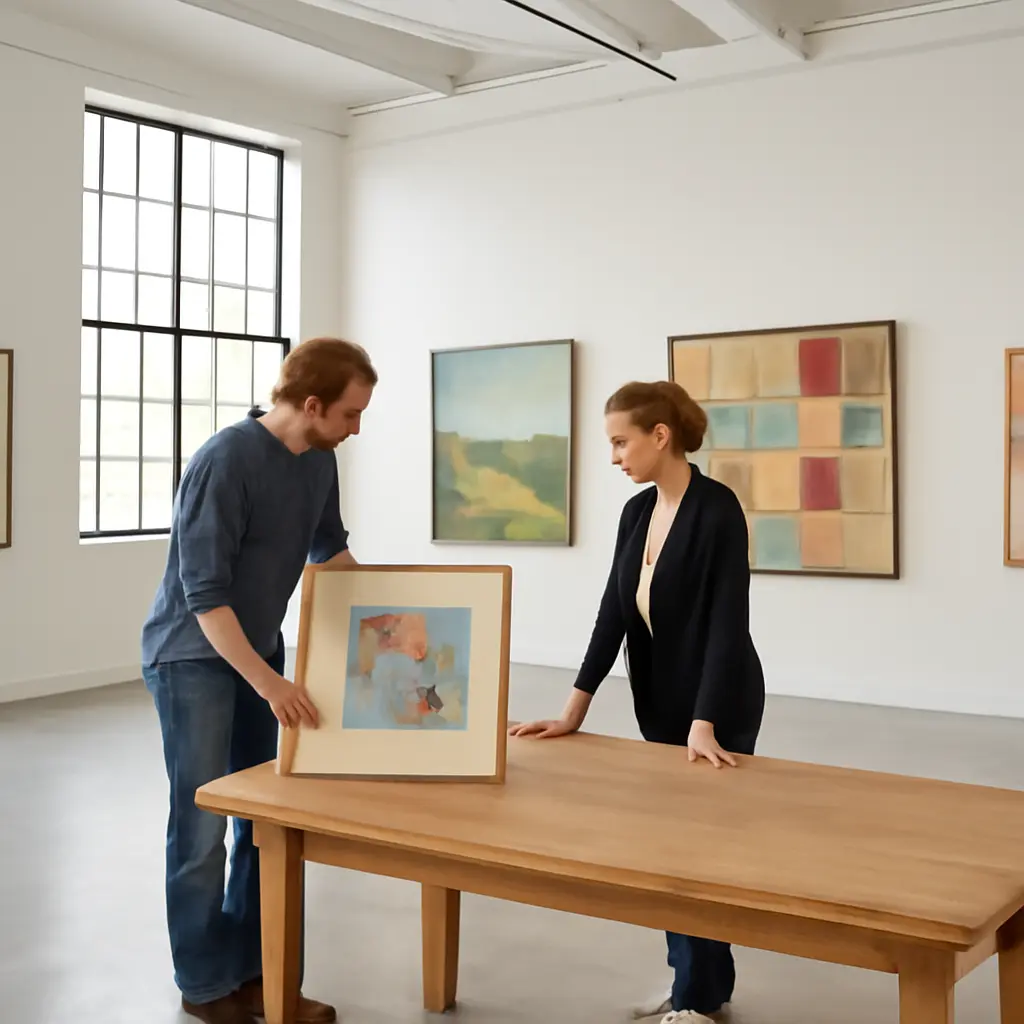
Artists and gallery partnerships work best when both sides agree on goals, communicate regularly, and put practical terms in writing. A gallery partnership is an ongoing professional relationship in which a gallery represents, exhibits, promotes, or sells an artist’s work, often in exchange for commission. There is no single contract or commission rate that fits every arrangement: artists should evaluate the specific services, costs, rights, and exit terms. The examples and guidance below draw on artist-rights resources, public gallery policies, and sector research to explain how to assess representation, negotiate terms, and build a partnership that can last.
Gallery partnerships: what a working relationship means
A gallery partnership is a business relationship, not simply an exhibition invitation. The gallery may provide a venue, curatorial context, sales support, marketing, and access to collectors; the artist supplies work and may contribute to promotion, installation, or other agreed activities. The exact balance varies by gallery and by project. The U.S. Federal Trade Commission’s guidance for artists and the nonprofit Volunteer Lawyers for the Arts both emphasize the value of clear written agreements when money, intellectual property, or professional services are involved.
That distinction matters because an exhibition, consignment, and ongoing representation are different arrangements. An exhibition may be a one-time presentation; consignment authorizes a gallery to hold and sell specified work; representation may involve a continuing commitment to promote or sell an artist’s work in a defined territory or market. Artists should ask what the gallery is actually promising before treating an invitation as a long-term partnership.
Representation and consignment
Representation describes the gallery’s agreed role in advancing an artist’s career or sales. Consignment is narrower: the artist delivers work for the gallery to display or sell, while ownership generally remains with the artist until a sale, subject to the contract and applicable law. A useful consignment record identifies each work, its condition, price, delivery date, and the person responsible for insurance and return shipping. Artists should also establish when payment is due after a sale and whether discounts require their approval.
Exhibitions and project partnerships
A project partnership can cover a single exhibition, art fair, commission, or pop-up. Its terms should match the project’s scope: dates, installation responsibilities, promotional materials, production expenses, sales commission, and what happens to unsold work. This limited format can be a practical way to test communication and follow-through before considering broader representation.
Gallery partnership terms artists should make explicit
The Artists’ Legal Resource Project at the University of California, Berkeley, and Volunteer Lawyers for the Arts provide artist-focused guidance on contracts and legal issues. Their practical lesson is straightforward: write down the shared expectations, rather than relying on informal assurances. A clear agreement reduces ambiguity even when both parties have a positive relationship.
Commission, expenses, and payment timing
Commission is the gallery’s share of a sale, but the percentage alone does not show whether a deal is fair. Artists should compare the commission with the services and costs covered, then specify whether it is calculated on the listed price or the final sale price. The agreement should say who pays for framing, shipping, installation, insurance, payment processing, and promotional production. It should also state when the artist receives proceeds and how the gallery reports sales, taxes, discounts, and any deductions. Public gallery policies differ, so there is no reliable universal rate to assume.
Exclusivity, territory, and duration
Exclusivity limits where or how an artist can sell work through other channels. Before agreeing, define the covered work, geographic area, sales platforms, and exceptions for an artist’s studio sales, existing clients, or institutional commissions. Set a start and end date, along with a review point and a termination process. A broad, indefinite restriction can constrain an artist’s options without guaranteeing meaningful promotion in return.
Copyright, images, and reproduction rights
Selling or consigning a physical artwork does not automatically transfer copyright. The U.S. Copyright Office explains that copyright is distinct from ownership of the material object. Artists should grant only the image-use permissions the gallery needs—for example, use in exhibition announcements, catalogs, press, or social media—and clarify whether permission is limited by time, purpose, or platform. Any licensing of an image for merchandise or other commercial use should be addressed separately.
Communication and promotion make gallery partnerships work
A signed agreement establishes the framework; consistent communication makes the relationship workable day to day. In its 2022 report on the working conditions of visual artists, the Freelands Foundation documented the financial and professional pressures artists face in the United Kingdom. While the report does not prescribe one ideal gallery model, it reinforces why artists benefit from transparent expectations, timely information, and realistic planning rather than vague promises of exposure.
Agree on promotion and audience-building
Promotion should be described as specific work, not an undefined benefit. The artist and gallery can agree on an exhibition announcement, mailing-list outreach, press materials, social posts, collector previews, or an opening event, while identifying who supplies images and copy and who approves public statements. The gallery should explain which audiences it can realistically reach. Artists, in turn, can share approved materials with their own networks without implying that every promotional activity guarantees sales.
Set a regular reporting rhythm
A simple communication schedule can prevent small issues from becoming disputes. Useful updates include confirmation that work arrived, installation details, event dates, inquiries, sales, and the status of unsold pieces. For consigned work, maintain a shared inventory and ask for written confirmation whenever a piece moves, is loaned, or is sold. These routines protect both parties and make it easier to assess whether the partnership is meeting its goals.
Real-world models: testing the fit before scaling up
Artists can evaluate a gallery’s public policies and track record before committing. For example, the Saatchi Gallery’s open-call and exhibition programs demonstrate a project-based route into a prominent venue, while online marketplaces such as Artsy connect galleries with digital audiences. These models are not interchangeable: a public exhibition opportunity, an online listing, and exclusive representation offer different services and risks. Artists should compare the actual contract and fee schedule rather than assume that visibility alone equals sales or career support.
Start with a defined pilot
A one-show or short-term consignment can test whether the gallery handles work carefully, communicates reliably, and follows agreed payment procedures. Define the pilot’s duration, inventory, responsibilities, and review criteria in advance. At the end, discuss what worked, what did not, and whether a broader commitment makes sense.
Review fit, not just prestige
A gallery’s reputation is only one factor. Artists should consider whether its program fits their work, whether its audience is relevant, and whether its level of support matches the commission or restrictions requested. Ask artists who have worked with the gallery about practical matters such as communication, payment, handling, and the return of unsold work. Check references discreetly and read the written agreement before delivering valuable pieces.
A practical checklist for artists and galleries
Before signing, both parties can use this checklist to make expectations concrete:
- List the works covered, their condition, agreed prices, and inventory process.
- Specify commission, permitted discounts, expenses, sales reporting, and payment deadlines.
- Define whether the arrangement is an exhibition, consignment, representation, or a combination.
- Set the term, territory, exclusivity limits, renewal process, and exit procedure.
- Clarify insurance, storage, transport, installation, and responsibility for damage or loss.
- Grant only the image and reproduction rights needed for agreed promotional uses.
- Agree on communication frequency, promotional tasks, and a date to review results.
- Keep signed copies, receipts, shipping records, and written approvals for changes.
Conclusion: build partnerships around clarity and trust
Gallery partnerships that work combine a suitable artistic fit with clear terms, realistic promotion, careful handling, and timely communication. Representation, consignment, and project-based exhibitions each serve different purposes, so artists should identify the arrangement on offer before committing. Compare the gallery’s services with its commission and restrictions, protect copyright, document inventory, and establish a review and exit process. Artists considering a partnership can consult a local arts lawyer or artist-rights organization, read the gallery’s policies, and begin with a well-defined project before expanding the relationship.
Sources: Volunteer Lawyers for the Arts, Legal Resources for Artists, https://vlany.org/; University of California, Berkeley, Artists’ Legal Resource Project, https://artistlegalresources.org/; U.S. Copyright Office, Copyright Basics, https://www.copyright.gov/circs/circ01.pdf; Freelands Foundation, The Artist Insights: Working Conditions of Visual Artists, 2022, https://freelandsfoundation.co.uk/; Saatchi Gallery, Open Calls, https://www.saatchigallery.com/open-calls; Artsy, For Galleries, https://www.artsy.net/about/partners/galleries