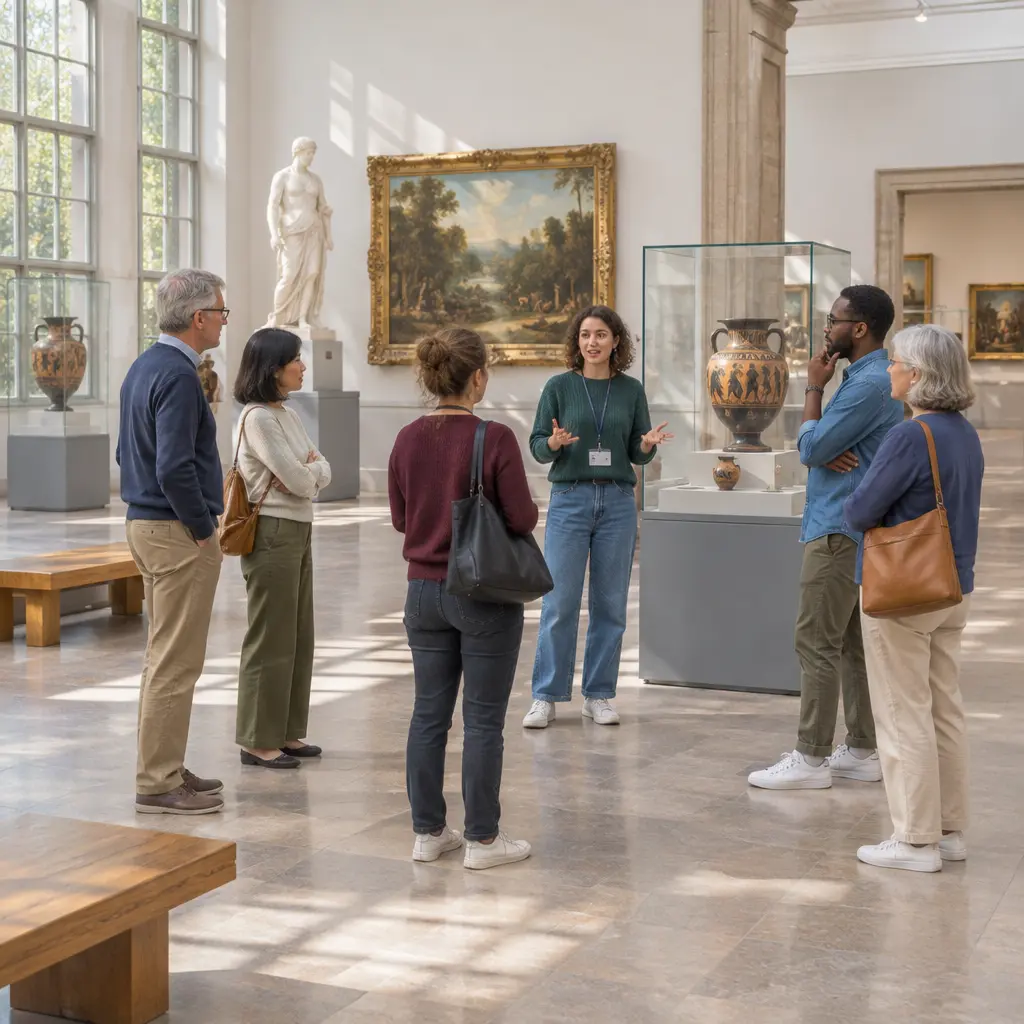
Museum programs are planned activities and services that help museums connect collections, research, and expertise with people beyond the gallery. Effective programs reach different audiences by adapting content, access, format, and timing to visitors’ needs—from families and school groups to adults, disabled people, and communities that have historically been underserved. The approach matters: the American Alliance of Museums reported that U.S. museums welcomed an estimated 850 million visits in 2019, while pandemic-era attendance and access disruptions highlighted the value of outreach and digital participation alongside on-site visits. Programs that combine inclusive design, community partnership, formal learning, and online options can broaden participation while giving museums ways to assess who is being served.
Museum programs and audience-centered access
An audience-centered museum program is an intentionally designed learning, cultural, or social experience that responds to the interests, circumstances, and access requirements of a defined group. The Institute of Museum and Library Services describes museums as institutions that serve the public through education, preservation, and access; audience-centered programming puts those public responsibilities into practice. Its characteristics include clear learning or participation goals, accessible formats, relevant interpretation, and evaluation that asks who attended and what barriers remain.
The term “audience” includes more than ticketed visitors. It can encompass students, families, local residents, online participants, people who do not currently visit, and communities whose histories appear in collections or exhibitions. Programs can be grouped by audience and by delivery method: school visits and teacher resources; family and intergenerational activities; adult talks and workshops; access programs; community co-created events; and digital experiences. These categories often overlap—a sensory-friendly family session, for example, combines family learning with disability access.
Formal learning for schools and educators
School programs connect museum objects, sites, and expertise with classroom learning. They may include guided visits, hands-on workshops, outreach lessons, educator professional development, or curriculum materials. The National Art Education Association’s research on museum education emphasizes the educational value of close looking, discussion, and direct engagement with works of art. Strong programs make learning objectives explicit and connect activities to teachers’ curricular needs without reducing the museum experience to a worksheet.
Access is a practical concern as well as a teaching concern: transport costs, scheduling, substitute coverage, and chaperone availability can prevent a class from visiting. Museums can respond with travel support, loan kits, virtual sessions, and reusable teacher resources. The U.S. Department of Education’s National Center for Education Statistics reported that public schools served about 49.6 million students in fall 2022, underscoring the potential scale of school partnerships—but also the importance of designing materials for varied ages, languages, and learning needs.
Family and intergenerational programs
Family programs support shared exploration among children and accompanying adults. Drop-in art-making, object trails, storytelling, family days, and multigenerational workshops give visitors different ways to participate without assuming everyone learns at the same pace. The Association of Children’s Museums has long promoted play-based learning as a way to encourage curiosity, experimentation, and conversation. Museum activities can extend that approach by connecting hands-on making to collection objects and by providing prompts that adults and children can explore together.
Family access depends on details such as stroller routes, seating, rest areas, clear wayfinding, and affordable admission. Programs are more welcoming when instructions are brief and flexible, materials are available in multiple languages, and activities allow visitors to join or leave without disrupting the experience.
Inclusive museum programs and community partnership
Inclusive programming aims to remove avoidable barriers to participation and to treat people as contributors, not simply recipients. The Smithsonian Accessibility Program frames accessibility as an ongoing institutional responsibility spanning buildings, exhibitions, communications, and events. In practice, this means considering physical, sensory, cognitive, financial, linguistic, and social access during planning—not adding accommodations only after a program is complete.
This approach connects access programs with community co-creation. Both ask museums to listen, share authority, and adjust based on lived experience. Relevant examples include relaxed visits, sign-language interpretation, multilingual tours, community-curated exhibitions, and programs developed with local organizations. Evaluation should consider not only attendance but also whether participants felt welcome, could take part meaningfully, and saw their knowledge represented.
Programs for disabled and neurodivergent visitors
Disability-access programs provide options that enable people with different physical, sensory, communication, and cognitive needs to participate. Examples include tactile tours, audio description, captioned films, American Sign Language interpretation, quiet hours, sensory maps, and relaxed performances or events. The U.S. Centers for Disease Control and Prevention estimates that 28.7% of U.S. adults—more than one in four—have some type of disability, making accessibility relevant to a substantial share of the public.
A useful design principle is to make access information available before a visit: describe routes, seating, sound levels, lighting, sensory features, and available accommodations. The National Endowment for the Arts’ accessibility guidance also encourages organizations to involve disabled people in planning and testing. This helps institutions identify barriers that may not be apparent to staff and improves the experience for companions and other visitors as well.
Community-led and culturally responsive programs
Community-led programming is developed with, rather than merely for, the people whose knowledge and experiences are involved. It can include oral-history projects, neighborhood partnerships, advisory groups, co-curated displays, language-specific events, and programs created with Indigenous communities. The American Alliance of Museums’ work on diversity, equity, accessibility, and inclusion encourages museums to examine institutional practices and relationships, not just the content of individual events.
The practice is especially important when collections involve contested histories or living cultural traditions. Consultation, fair compensation, shared decision-making, and clear agreements about interpretation help build trust. The National Museum of the American Indian’s “Our Peoples” and community-curation work illustrates how Indigenous knowledge and perspectives can shape interpretation. Such partnerships take time, but they can make programs more accurate, relevant, and accountable.
Digital and outreach programs extend museum reach
Digital museum programs use online tools to support learning and participation beyond the physical building. They include virtual tours, livestreamed talks, online collections, downloadable activities, and video workshops. The pandemic accelerated this work: the UNESCO report “Museums Around the World in the Face of COVID-19” documented widespread museum closures and a rapid shift toward digital communication. Digital access can serve people who live far away, cannot travel, or prefer to explore at their own pace, but it does not replace the need for accessible in-person experiences.
Online learning and virtual engagement
Online programs translate museum expertise into formats that people can use remotely. A virtual classroom visit, for instance, can combine a live educator, high-resolution object images, and student questions. The National Gallery of Art and other major museums expanded online learning resources during pandemic closures, showing how collections can support teaching even when galleries are inaccessible. Effective digital programs provide captions, transcripts, keyboard-friendly navigation, and low-bandwidth alternatives where possible.
Digital participation is not automatically equitable. The U.S. Census Bureau has documented persistent differences in broadband access across households and communities. Museums should therefore offer more than one route to participation: downloadable or printable materials, phone-accessible content, and in-person or partner-site options can help reduce the digital divide.
Outreach beyond the museum building
Outreach programs bring museum resources to schools, libraries, community centers, hospitals, and public spaces. They may involve traveling exhibitions, mobile museums, educator visits, object loans, or collaborations with local service organizations. The model reduces travel barriers and gives museums opportunities to build relationships in places where potential audiences already gather.
The “Museum on Main Street” program of the Smithsonian Institution’s Traveling Exhibition Service illustrates how exhibitions and local partnerships can serve small towns and rural communities. Outreach is strongest when local partners help shape themes, logistics, and follow-up activities, rather than serving only as venues. A chart comparing in-building visits, outreach participation, and online engagement over time can help a museum see which channels reach distinct groups and where investment is needed.
Evaluation makes museum programs more responsive
Program evaluation is the systematic collection and use of information to understand a program’s reach, quality, and outcomes. The American Evaluation Association describes evaluation as a way to assess merit, worth, and significance; for museums, that means looking beyond head counts. Useful measures include attendance, repeat participation, school or community partner feedback, accessibility requests met, learning or confidence reported by participants, and whether new audiences return.
A practical evaluation plan starts with a question: Which groups are participating, and which are not? Museums can combine registration data, short surveys, interviews, observation, and partner feedback while protecting privacy. Results should guide changes—for example, shifting event times, adding interpretation, revising outreach locations, or budgeting for access services. Attendance figures are valuable, but they do not alone show whether a program was welcoming or meaningful.
Conclusion: Build programs with audiences, not assumptions
Museum programs reach different audiences when formal learning, family activities, disability access, community partnership, digital engagement, and outreach are treated as connected parts of public service. The strongest efforts pair relevant content with practical access, involve communities in decisions, and evaluate both reach and experience. Museums can begin by identifying local barriers, consulting the people most affected, and testing programs with clear measures of success. Further reading from the American Alliance of Museums, the Smithsonian Accessibility Program, and the Institute of Museum and Library Services can help institutions turn those commitments into sustained practice.
Sources: American Alliance of Museums, “Museum Facts & Data,” https://www.aam-us.org/programs/about-museums/museum-facts-data/; Institute of Museum and Library Services, “Museum Definition,” https://www.imls.gov/grants/museum-grants-for-america/museum-definition; National Center for Education Statistics, “Public School Enrollment,” https://nces.ed.gov/programs/coe/indicator/cga; Association of Children’s Museums, “What Is a Children’s Museum?,” https://childrensmuseums.org/about/about-acm/; Smithsonian Accessibility Program, “Accessibility,” https://accessibility.si.edu/; U.S. Centers for Disease Control and Prevention, “Disability Impacts All of Us,” https://www.cdc.gov/disability-and-health/articles-documents/disability-impacts-all-of-us.html; National Endowment for the Arts, “Accessibility,” https://www.arts.gov/impact/accessibility; American Alliance of Museums, “Facing Change: Insights from AAM’s Diversity, Equity, Accessibility, and Inclusion Working Group,” https://www.aam-us.org/programs/diversity-equity-accessibility-and-inclusion/; National Museum of the American Indian, “Our Peoples,” https://americanindian.si.edu/explore/collections; UNESCO, “Museums Around the World in the Face of COVID-19,” https://unesdoc.unesco.org/ark:/48223/pf0000373530; National Gallery of Art, “NGA Online Editions and Education Resources,” https://www.nga.gov/learn/teachers.html; U.S. Census Bureau, “Computer and Internet Use in the United States,” https://www.census.gov/topics/population/computer-internet.html; Smithsonian Institution Traveling Exhibition Service, “Museum on Main Street,” https://museumonmainstreet.org/; American Evaluation Association, “What Is Evaluation?,” https://www.eval.org/About/What-is-Evaluation.