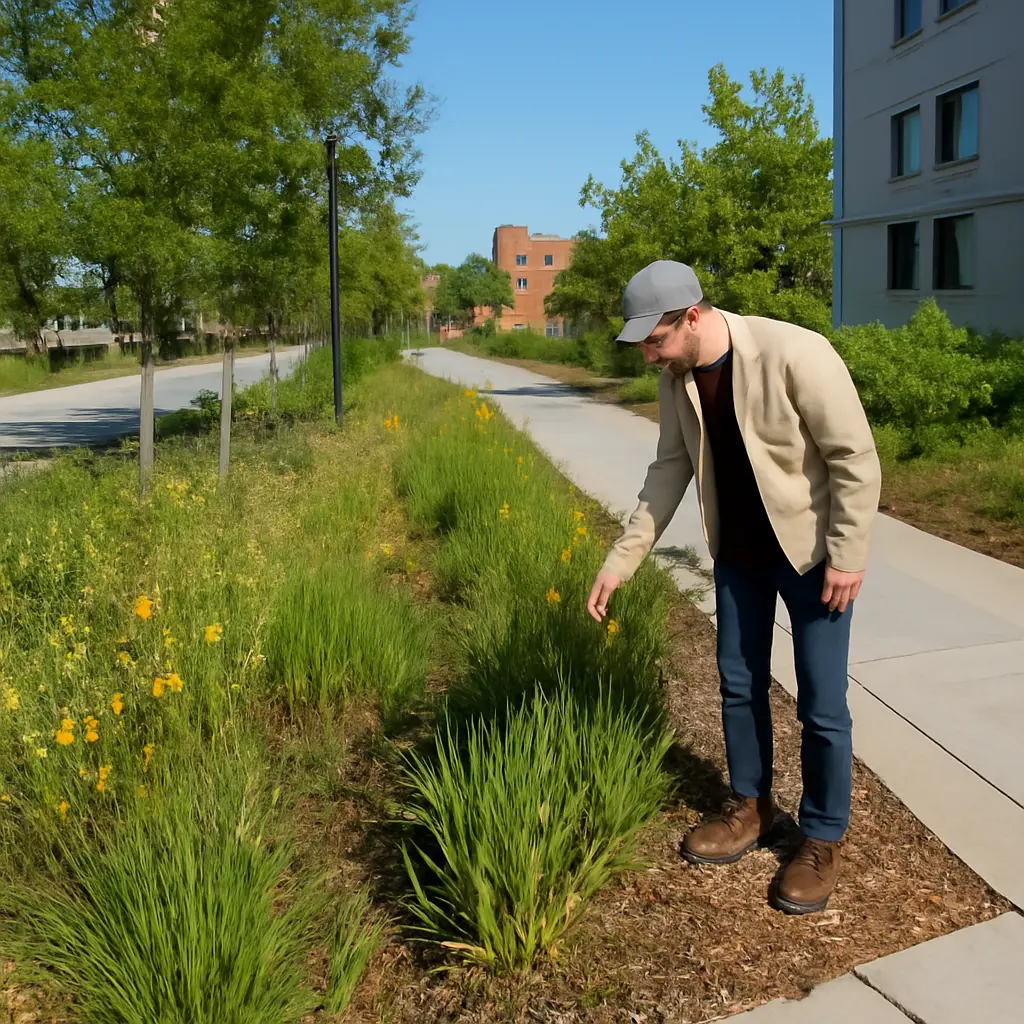
Ecological art is creative work that engages with living systems, environmental change, and the relationships between people and place. Across cities, it is appearing not only in galleries but also in parks, vacant lots, waterways, and public infrastructure: artists and residents are turning stormwater gardens into shared landscapes, restoring habitats through collaborative projects, and making environmental issues visible through public installations. These efforts matter in a warming, urbanizing world: the United Nations estimates that cities house about 55% of the global population, a share projected to reach 68% by 2050. Ecological art is not a substitute for climate policy or conservation, but it can help communities notice local environmental problems, take part in practical responses, and imagine more livable places.
How ecological art connects creativity with urban change
“Ecological art” is an umbrella term rather than a single medium or formal movement. The artist and writer Suzi Gablik helped popularize the idea of art as a participatory, socially responsible practice, while the international Ecoart Network describes ecoart as art that embraces an environmental ethic and often works collaboratively with natural systems. In practice, ecological art can include habitat restoration, community gardens, site-specific installations, public performances, and projects that interpret environmental data.
Its defining feature is not simply the use of recycled material or a nature-themed image. Ecological art connects aesthetic choices to ecological relationships and consequences. A project might improve a site’s habitat, make a neglected waterway legible to residents, or bring neighbors into decisions about public space. Some projects make measurable physical changes; others chiefly change how people understand a place. Many do both, though their environmental effects should be assessed rather than assumed.
Restorative and land-based art
Restorative ecological art combines creative practice with care for a specific landscape. Artists may work with ecologists, Indigenous knowledge holders, gardeners, or local residents to restore native planting, reconnect habitats, or interpret the history of a damaged site. The work may be a living installation rather than a permanent object: plants grow, seasons alter its appearance, and maintenance becomes part of the artwork.
A frequently cited example is Agnes Denes’s Wheatfield—A Confrontation, planted on a landfill near Manhattan’s Wall Street in 1982. The two-acre wheat field made land value, food, and urban priorities visible in a striking public setting. It was not a lasting urban farm, but it showed how a temporary artwork could prompt questions about what cities protect, cultivate, and leave unused.
Community gardens and neighborhood stewardship
Community-based ecological art takes shape through shared work: planting, building, storytelling, and caring for a place together. A garden can function at once as habitat, meeting ground, food-growing space, and cultural expression. The artistic contribution may lie in its design, its collective process, or the stories and rituals residents attach to it.
These projects can strengthen local stewardship, but they also raise practical questions: Who controls the land? Who performs unpaid maintenance? Will residents benefit if the area becomes more desirable? The American Community Gardening Association has documented community gardening as a widespread practice, but the number and longevity of gardens vary by city and depend on land access, funding, and sustained community support. Successful projects make those conditions part of the conversation, rather than treating participation as a one-time event.
Public art that interprets urban nature
Interpretive ecological art helps people see processes that are usually hidden or overlooked: rain moving through a neighborhood, birds using a fragmented habitat, or the history of a polluted shoreline. Murals, sound works, signs, sculptures, and guided walks can make environmental information accessible in everyday settings.
The distinction between interpretation and environmental improvement is important. A visually compelling artwork does not automatically clean air or water. Its value may instead be educational, cultural, or civic—encouraging people to ask who is affected by a problem and what response is possible. The strongest projects connect interpretation to local knowledge and credible information, and avoid presenting complex ecological issues as though they had simple fixes.
How ecological art responds to city landscapes
The city itself provides both the setting and the subject for ecological art. Dense development, transport networks, heat-retaining surfaces, and altered waterways shape how urban residents experience nature. The United Nations’ estimate that 55% of people already live in urban areas helps explain why public space is an important place to address environmental change. Yet citywide figures can obscure sharp differences between neighborhoods, including who has access to shade, parks, clean air, and safe outdoor spaces.
Green infrastructure as a living canvas
Green infrastructure uses vegetation and soil to manage environmental functions, often alongside conventional drainage or transport systems. Rain gardens, planted swales, green roofs, and restored wetlands can help absorb or slow stormwater while creating habitat and improving the experience of public space. When artists collaborate in their design, these systems can also communicate how water moves through the city.
Philadelphia’s Green City, Clean Waters program is a notable example of a large-scale public effort to manage stormwater through green infrastructure. The Philadelphia Water Department describes a 25-year plan launched in 2011 to reduce combined sewer overflows using measures that include rain gardens, tree trenches, and green roofs. It is primarily an infrastructure program, not an art project; its relevance is that artists and communities can help make such systems visible, understandable, and rooted in neighborhood identity.
Art, heat, and unequal access to nature
Urban heat is another subject that ecological art can bring into public view. The U.S. Environmental Protection Agency explains that the heat-island effect occurs when built-up areas become warmer than nearby less-developed areas, in part because roads and buildings absorb and re-emit heat. Tree cover and vegetation can help cool places, but their distribution is often uneven. The U.S. Forest Service’s i-Tree research tools help communities assess urban trees and their benefits, including shade and stormwater interception.
Artists can map neighborhood temperatures, create shaded gathering spaces, or work with residents to tell the history of trees and parks. Such projects are most useful when they complement, rather than replace, sustained investment in cooling infrastructure. They should also avoid treating greening as an uncomplicated good: new investment can contribute to displacement if residents are not involved in decisions and protected from rising housing costs.
Waterways, coastlines, and environmental memory
Urban rivers and shorelines are dynamic places where ecological recovery, recreation, industry, and environmental justice meet. Art can document a waterway’s histories, translate monitoring data, and create opportunities for residents to encounter a place that infrastructure may have hidden from view. It can also give public attention to pollution or flood risk, though scientific claims should be grounded in monitoring by qualified organizations.
The decades-long recovery of New York’s Bronx River illustrates the importance of community partnerships in urban environmental work. Groups including the Bronx River Alliance have supported restoration, education, and public access efforts along the river. The river’s story is not an artwork in itself, but it offers a setting in which public art, community events, and ecological stewardship can reinforce one another.
What makes ecological art effective and responsible
Ecological art can contribute to environmental awareness and neighborhood life, but its quality cannot be measured by visibility alone. A temporary installation may attract attention without producing lasting ecological benefits; a quiet, ongoing collaboration may change how a site is cared for. Clear goals help communities distinguish artistic impact, social value, and measurable environmental outcomes.
Co-design and local knowledge
Co-designed work involves residents early enough to shape the project, not merely attend its launch. That means listening to local priorities, compensating community expertise where possible, and making decisions about maintenance and ownership transparent. Artists can bring creative methods, while residents often know the place’s everyday uses, histories, and constraints.
The U.S. Environmental Protection Agency’s environmental justice framework emphasizes meaningful involvement and fair treatment in environmental decision-making. Applied to ecological art, this means asking who sets the agenda, whose stories are represented, and who benefits from changes to a site. These questions matter particularly in neighborhoods that have experienced disinvestment or environmental burdens.
Measuring outcomes without reducing art to a score
Evaluation can track different kinds of outcomes: native plant survival, stormwater capacity, participation, access, learning, or whether a project continues after its initial funding ends. The right measures depend on the project’s stated purpose. Ecological claims should be assessed with appropriate expertise and a baseline for comparison; social and cultural outcomes may require interviews, observation, and community-defined measures.
A useful project description says what it intends to change and what it cannot promise. For example, a mural about air pollution can support public understanding, but it cannot establish that local air quality improved. Pairing creative interpretation with reliable monitoring, public data, or a restoration partner makes the work more trustworthy and useful.
Maintenance, materials, and long-term care
Ecological responsibility extends beyond an artwork’s opening day. Projects should consider material sourcing, toxicity, transport, durability, repair, and eventual removal. Living works require water, skilled care, and plans for changing conditions; temporary works need responsible disposal or reuse. A project that depends on community maintenance should budget for that labor instead of assuming it will be freely available.
Long-term care is also a design question. Native planting may support local biodiversity, but plant selection must fit the site and its maintenance capacity. Public installations need safe access and clear responsibility for repairs. By planning these details with partners from the beginning, ecological art can become part of a neighborhood’s ongoing stewardship rather than a short-lived spectacle.
How to find and support ecological art in your city
The quiet revolution is often easiest to find through local relationships rather than major exhibitions. Look for projects led by parks departments, watershed groups, community gardens, libraries, universities, environmental justice organizations, and neighborhood arts organizations. Public meetings and volunteer planting days can reveal work that is not widely advertised.
- Check your city’s public-art, parks, and climate-adaptation programs for current projects and open calls.
- Ask local watershed or habitat organizations about restoration sites, public walks, and community-science activities.
- Visit gardens, greenways, and stormwater installations with attention to who uses them and who maintains them.
- Support projects that credit local collaborators, share decision-making, and explain their ecological goals and limitations.
- If proposing a project, begin with the community and site—not with a finished concept—and budget for access, maintenance, and evaluation.
A useful visual for a local article or presentation would be a neighborhood map marking ecological artworks alongside tree canopy, parks, waterways, and stormwater projects. A simple comparison chart could separate each project’s artistic aim, community partners, ecological goal, and available evidence of impact. These tools help readers see both the connections and the differences between cultural activity and environmental infrastructure.
Conclusion: ecological art makes the city a shared living project
Ecological art links creative practice with urban landscapes through restoration, community stewardship, public interpretation, and collaboration with green infrastructure. Its importance lies not in claiming that art alone can solve environmental problems, but in helping people notice their surroundings, share knowledge, and participate in shaping local responses. The most responsible work is grounded in place, informed by credible ecological expertise, inclusive of residents, and supported by a plan for long-term care.
To find the quiet revolution near you, start with a neighborhood garden, river group, public-art office, or local environmental organization. Visit a project, ask who shaped it and who maintains it, and look for opportunities to contribute. A city’s ecological future is built through policy and infrastructure, but also through the everyday ways communities learn to care for shared places.
Sources: United Nations Department of Economic and Social Affairs, World Urbanization Prospects: The 2018 Revision, https://population.un.org/wup/; Ecoart Network, About Ecoart, https://ecoartnetwork.org/about/; Gablik, Suzi, The Reenchantment of Art, Thames & Hudson, 1991, https://www.thamesandhudsonusa.com/books/the-reenchantment-of-art-paperback; Agnes Denes Studio, Wheatfield—A Confrontation, https://www.agnesdenesstudio.com/works8.html; American Community Gardening Association, About Community Gardening, https://communitygarden.org/resources/; Philadelphia Water Department, Green City, Clean Waters, https://www.phila.gov/programs/green-city-clean-waters/; U.S. Environmental Protection Agency, Learn About Heat Islands, https://www.epa.gov/heatislands/learn-about-heat-islands; U.S. Forest Service, i-Tree, https://www.itreetools.org/; Bronx River Alliance, About the Bronx River Alliance, https://bronxriver.org/about-us; U.S. Environmental Protection Agency, Environmental Justice, https://www.epa.gov/environmentaljustice