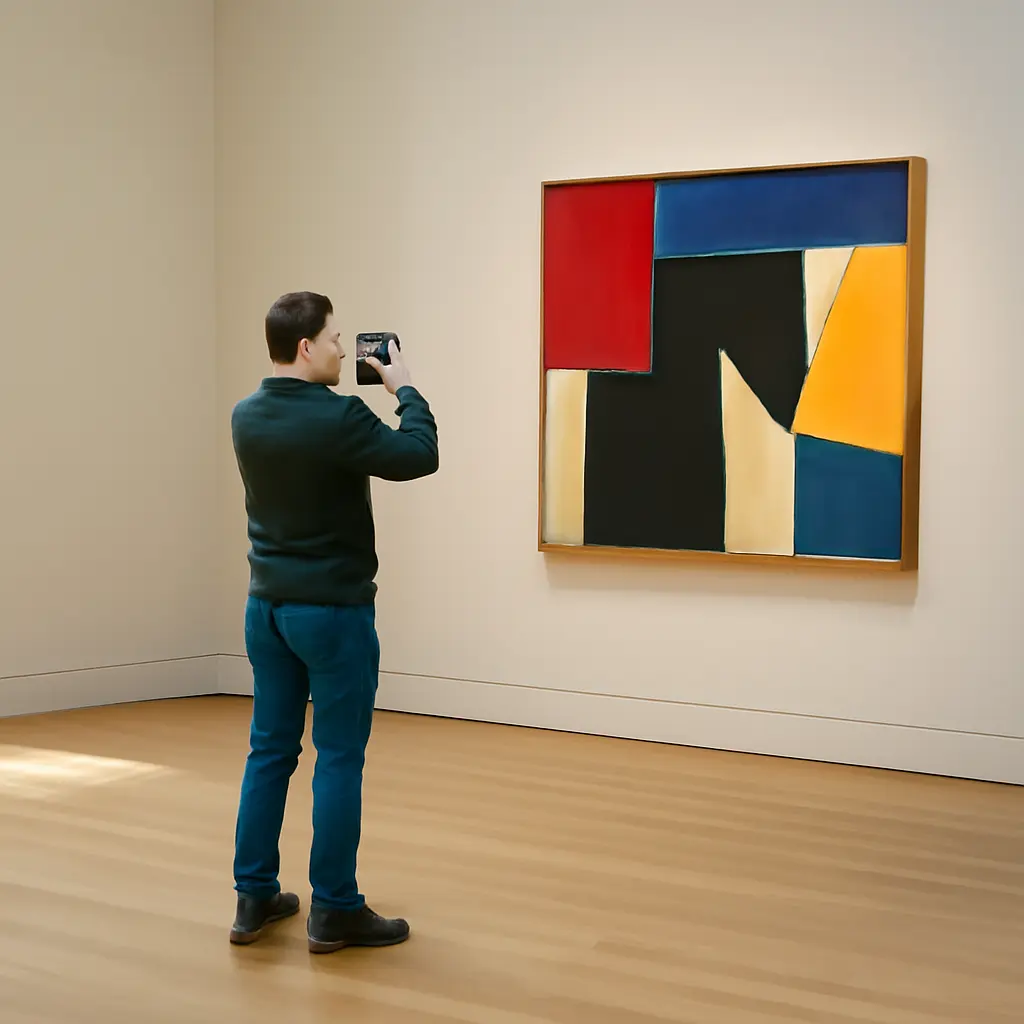
Museums and galleries are institutions that collect, preserve, research, and interpret objects and ideas for public benefit. For Gen Z, TikTok increasingly acts as a discovery layer around these institutions: it can turn an exhibition, a museum visit, or even a rule against filming into a reason to pay attention. The shift matters because younger audiences are substantial cultural participants: the U.S. National Endowment for the Arts reported that 38% of adults ages 18–24 attended an art exhibit or gallery in 2022, while the Pew Research Center found in 2023 that about one-third of U.S. adults under 30 regularly got news on TikTok. Together, these figures help explain why museums are rethinking the velvet rope—not simply by allowing phones, but by balancing access, conservation, interpretation, and the social-media behaviors that bring visitors through the door.
TikTok discovery changes museum access and audience development
Museum access is the practical and interpretive ability to encounter collections, exhibitions, and programs, whether in person or online. The American Alliance of Museums describes museums as institutions that serve the public through stewardship, education, and interpretation; access therefore means more than admitting visitors. It also involves making collections visible, experiences understandable, and participation welcoming to people who may not already see museums as “for them.”
TikTok can support that work by circulating short, personal encounters beyond an institution’s own channels. The platform’s For You feed recommends videos based on user interactions and other signals, allowing a gallery clip to reach viewers who do not follow the museum. That reach is not the same as a confirmed museum visit, and views do not establish learning or long-term engagement. Still, it changes how audiences may first encounter an institution: through a creator’s reaction, a conservation detail, a funny moment, or a striking room rather than a formal advertisement.
Social video as a discovery pathway
Social video discovery is the process by which a brief post introduces viewers to a place, object, or cultural activity. Pew Research Center’s 2023 survey found that 32% of U.S. adults ages 18–29 said they regularly got news on TikTok. That is a measure of news use, not museum use, but it illustrates the platform’s relevance as an information environment for younger adults. Museums can meet that audience with short-form material that offers a clear invitation: what is on view, why an object matters, and what a visitor can expect.
The strongest clips often make the institution legible without reducing it to a backdrop. A conservator can explain why a painting is being examined; an educator can introduce a recurring symbol; a visitor can show how a gallery feels at a particular time of day. These formats connect entertainment with context. A useful measure is not only the number of views, but whether a post leads to event inquiries, ticket clicks, repeat visits, or meaningful questions.
Participation, representation, and the “third place”
Participatory access gives visitors a role in shaping how an institution is encountered, rather than treating them solely as recipients of expert interpretation. This can include creator collaborations, visitor-generated recommendations, accessible captions, and programs responding to community interests. The National Endowment for the Arts’ 2022 Survey of Public Participation in the Arts found that 38% of adults ages 18–24 attended an art exhibit or gallery that year. The statistic challenges the assumption that younger people are inherently uninterested, while also underscoring that attendance data alone cannot explain who feels welcome, who is represented, or what barriers remain.
A TikTok trend can make a museum feel like a social destination—a place to meet friends, explore, and create—not only a quiet venue for formal study. Yet participation should not mean handing institutional authority to whichever post performs best. Museums can invite contemporary voices while retaining responsibility for accuracy, provenance, cultural sensitivity, and the interpretation of contested histories.
Museum phone policies balance visitor expression with collection care
A museum phone policy is a set of rules governing photography, recording, sharing, and device use in galleries and public spaces. There is no single universal policy: permissions can vary by exhibition, lender agreement, copyright status, conservation needs, and visitor safety. The “velvet rope” is therefore both literal and figurative. Physical barriers protect vulnerable works, while rules and institutional conventions can signal who is trusted to engage with them and how.
Opening a collection to phones may support memory, accessibility, and public conversation, but it does not remove the need for limits. Flash, tripods, crowding, and filming other visitors can create risks or disrupt the experience. The International Council of Museums’ definition, adopted in 2022, emphasizes that museums are not-for-profit, permanent institutions that research, collect, conserve, interpret, and exhibit tangible and intangible heritage for society. Digital sharing can extend interpretation, but it must remain compatible with those duties.
Photography, recording, and conservation rules
Collection-care rules specify what visitors may photograph and under what conditions. A museum may allow non-flash photography in permanent galleries but prohibit it in a temporary exhibition because a lender, artist, or rights-holder has set restrictions. Conservation concerns can also vary by object and display environment. The Smithsonian Institution, for example, advises visitors to follow posted photography rules and not use flash, tripods, or selfie sticks in its museums. Such policies show that “phones allowed” is not a blanket permission to record every artwork in every way.
Clear signs and staff explanations make restrictions easier to understand. Rather than presenting a rule as arbitrary, an institution can explain whether it protects a fragile object, respects an artist’s rights, or keeps a narrow gallery route safe. That explanation turns enforcement into interpretation and can reduce the feeling that visitors are being reprimanded for ordinary contemporary behavior.
Visitor privacy and respectful filming
Visitor privacy concerns arise when a person is recorded or posted without meaningful consent. A museum may permit photography of artworks while asking visitors not to film other people, especially children, school groups, or anyone participating in a private event. The distinction matters because a gallery is a shared public setting, not a content studio in which every bystander has agreed to become part of a creator’s video.
Institutions can communicate a simple etiquette: frame the artwork rather than strangers, ask before featuring another visitor, avoid blocking access, and follow staff directions. For creators, adding captions and describing visual details can make posts more accessible; for museums, providing designated filming areas or scheduled creator visits can reduce disruption while still enabling social storytelling.
TikTok storytelling expands interpretation but can flatten context
Museum interpretation is the process of helping people understand the significance of collections, places, and ideas. TikTok storytelling compresses that work into fast, highly visual formats. A short video can make a hidden detail memorable or introduce a curator’s perspective, but it can also detach an object from its history, cultural setting, or contested ownership. The task is not to choose between viral simplicity and scholarly depth; it is to design a pathway from the first hook to fuller context.
Behind-the-scenes expertise
Behind-the-scenes content makes museum labor visible: conservation, cataloguing, installation, research, and preparation. It can challenge the impression that galleries simply display beautiful objects without complex care. The American Alliance of Museums’ work on museum practice consistently identifies stewardship and public service as core institutional responsibilities; short videos can show those responsibilities through specific examples, such as how a conservator assesses a tear or why a sculpture needs a particular mount.
This format works best when staff are treated as experts rather than props. Naming the relevant discipline, distinguishing established evidence from uncertainty, and linking the clip’s central claim to a gallery label or online collection record helps preserve credibility. When a topic is sensitive or disputed, a short post should signpost the fuller account rather than pretending that a few seconds settle the matter.
Creator collaborations and community knowledge
Creator collaboration is a partnership in which a museum invites an outside storyteller to interpret or respond to its collections. A creator may bring cultural knowledge, humor, accessibility expertise, or a relationship with an audience the museum does not reach through its own communications. The partnership is most meaningful when creators have agency, fair compensation, clear credit, and room to express a perspective that is not simply an institutional script.
The approach also calls for careful preparation. Museums should agree on access, filming boundaries, factual review, rights, and how a creator’s work may be reused. Where collections involve living communities or sensitive cultural material, consultation should extend beyond a one-off promotional partnership. TikTok can amplify community knowledge, but platform visibility should not substitute for sustained relationships or shared decision-making.
Virality, accuracy, and the limits of short-form context
Virality is rapid, extensive circulation, often driven by recommendation systems and audience response. It can bring attention to an overlooked object or exhibit, yet engagement metrics do not prove that viewers understood the content or attended in person. Pew Research Center’s findings on TikTok use describe audience habits, not the educational effects of museum videos. Institutions should therefore treat views, likes, and shares as indicators of exposure, then assess outcomes with questions, event participation, visitor feedback, and other measures.
Accuracy also depends on how a clip handles uncertainty. A concise post can state what is known, identify what is debated, and direct viewers to longer interpretation. This is particularly important when discussing colonial histories, human remains, sacred objects, or works whose attribution and ownership are contested. A viral format should open the door to context, not become a substitute for it.
Museum case studies show different ways to lower the velvet rope
Institutional examples show that “TikTok-friendly” does not have to mean turning every gallery into a filming set. Museums can use digital access, creator partnerships, and clear visitor guidance in different combinations, depending on their collections and communities. The underlying question is whether social media helps people encounter the institution more meaningfully while respecting the work and the people connected to it.
The Rijksmuseum and digital collection access
The Rijksmuseum in Amsterdam provides a prominent example of digital access through Rijksstudio, which allows users to explore and download high-resolution images of many collection works. This model extends engagement beyond the gallery and invites people to study, reuse, and discuss images under the terms stated by the museum. Its relevance to TikTok is broader than any single platform: a short video can spark interest, while an open digital collection gives viewers somewhere reliable to continue exploring.
The example also highlights an important distinction. Making an image available online does not automatically grant permission to film or photograph every object on display, nor does digital access resolve questions of cultural ownership. A museum must explain the rights and context attached to each work rather than assume that online visibility makes every form of reuse appropriate.
The Museum of Ice Cream and the experience-first model
The Museum of Ice Cream illustrates an experience-first attraction in which colorful, interactive environments are designed to be photographed and shared. Its approach differs from that of a collecting museum, but it demonstrates how social-media behavior can shape a visitor experience from the outset. The contrast raises useful questions for traditional institutions: which participatory elements make a visit more welcoming, and which risk reducing cultural objects to photogenic backdrops?
For art and history museums, the lesson is not to imitate immersive attractions wholesale. Rather, institutions can identify places where photography supports interpretation—such as a striking installation, an interactive learning space, or a clearly explained visitor prompt—while preserving quiet, reflective areas and protecting works that require stricter controls.
A practical framework for responsible museum TikTok
A responsible strategy connects audience development with institutional purpose. Museums can make their social-video work more effective by setting objectives before chasing trends, aligning permissions with collection-care needs, and measuring both digital response and in-person experience.
- Define the goal: discovery, event attendance, collection learning, community participation, or visitor guidance.
- Match content to the goal: use a staff explanation for process, a creator partnership for a distinct perspective, and a practical guide for planning a visit.
- Set transparent boundaries: state where filming is permitted, explain exceptions, and protect visitor privacy.
- Provide a next step: link the video’s subject to a gallery, event, accessible transcript, or collection page through platform features and on-site interpretation.
- Evaluate beyond views: track useful actions and gather feedback about welcome, comprehension, and the quality of the visit.
A chart comparing video reach, ticket-page visits, event registrations, and visitor survey responses would help distinguish attention from action. The measures should be reported with their limits: a video view may be brief, a click may not lead to attendance, and a visitor’s experience cannot be reduced to a single engagement score.
Conclusion: Gen Z engagement can open the museum without erasing its boundaries
TikTok is changing museum discovery by making short-form storytelling part of how younger audiences encounter cultural institutions. Museum access and audience development benefit when social video offers an inviting first step; phone policies work when they explain the balance between expression, privacy, and conservation; and interpretation is strongest when viral storytelling leads to deeper context. The attendance and platform-use statistics indicate that younger adults participate in both cultural life and social video, but they do not guarantee that every post creates a visit or a lasting connection.
The broader implication is that the velvet rope should be reconsidered as a question of access and responsibility, not simply removed or preserved. Museums can welcome Gen Z creators and visitors while protecting objects, respecting communities, and making their expertise visible. Readers can explore a museum’s photography policy, browse its online collection, and attend a program that invites conversation. Institutions, in turn, should test their digital approaches with the audiences they hope to serve and share what they learn.
Sources: National Endowment for the Arts, “Arts Participation Patterns in 2022: Highlights from the Survey of Public Participation in the Arts,” https://www.arts.gov/impact/research/arts-data-profile-series/adp-34; Pew Research Center, “Americans’ Social Media Use,” 2023, https://www.pewresearch.org/internet/2023/12/11/americans-social-media-use/; American Alliance of Museums, “About Museums,” https://www.aam-us.org/programs/about-museums/; International Council of Museums, “Museum Definition,” 2022, https://icom.museum/en/resources/standards-guidelines/museum-definition/; Smithsonian Institution, “Frequently Asked Questions,” https://www.si.edu/visit/frequently-asked-questions; Rijksmuseum, “Rijksstudio,” https://www.rijksmuseum.nl/en/rijksstudio; Museum of Ice Cream, “About,” https://museumoficecream.com/about/