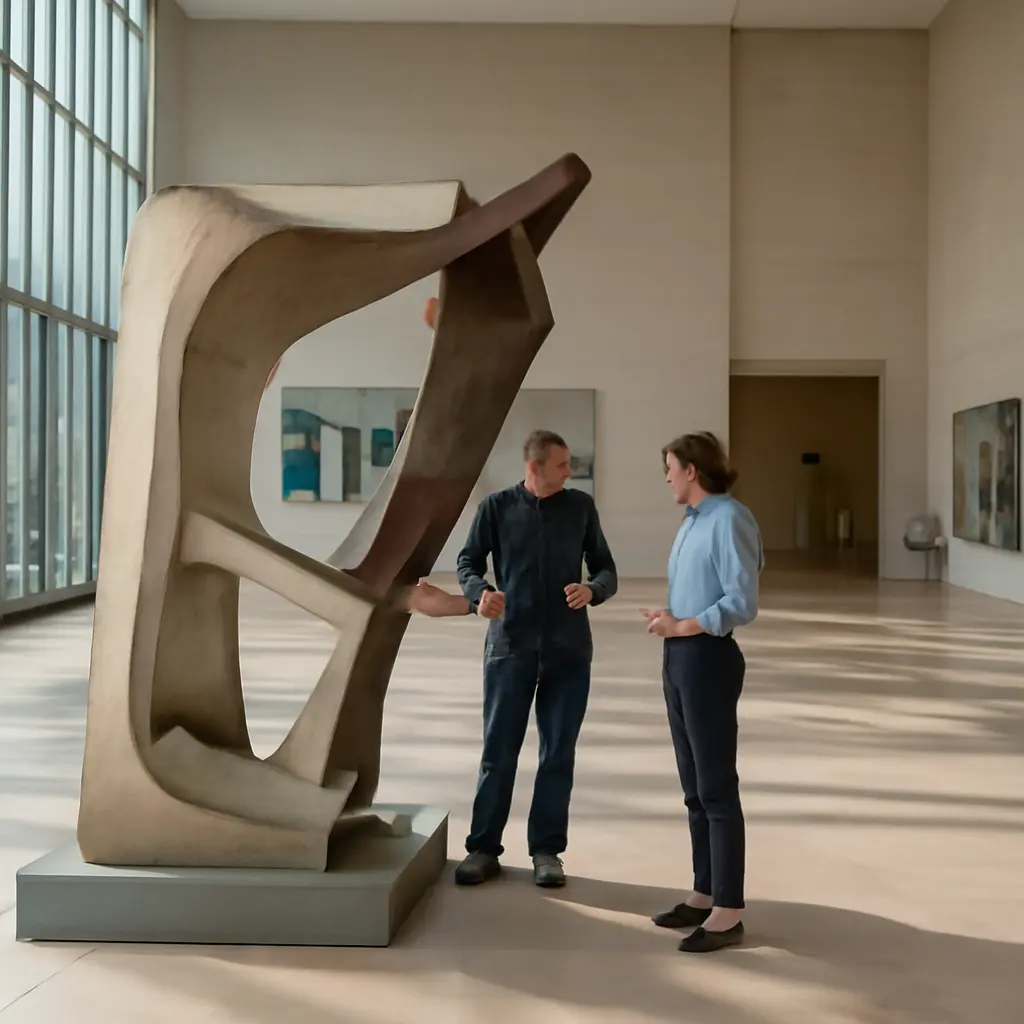
Artist–institution partnerships bring artists and organizations such as museums, universities, foundations, and public agencies together to create, present, or support cultural work. They are changing the game by expanding who gets to make decisions, where art is encountered, how communities participate, and what lasting value cultural projects can create. From shared authority and public-space commissions to research collaborations, digital access, and new funding models, these partnerships are increasingly important: the National Endowment for the Arts reported that 52% of U.S. adults attended a live arts event in 2022, while its research also documents the role of arts participation in community life. The six approaches below show how collaboration can turn institutional resources into more ambitious, accessible, and accountable artistic work.
How artist–institution partnerships redistribute creative authority
An artist–institution partnership is a structured relationship in which an artist and an organization contribute resources, expertise, access, or decision-making to a shared cultural activity. There is no single universal definition: the arrangement may be a commission, residency, co-production, community engagement project, research collaboration, or long-term affiliation. The partnership differs from a simple purchase when both parties shape the process or its outcomes.
The key attributes are shared purpose, negotiated responsibilities, adequate support for artists, and clarity about who controls the work and benefits from it. The U.S. National Endowment for the Arts’ 2022 Survey of Public Participation in the Arts found that 52% of adults attended at least one live performing arts event during the year. That figure illustrates the scale of potential public engagement, but partnership quality depends on more than attendance: it also involves access, representation, fair compensation, and meaningful participation.
1. Co-creation and shared governance
Co-creation means that artists and institutional staff develop a project together rather than treating the artist as a supplier brought in after the brief has already been decided. Shared governance goes further by giving artists, participants, or community representatives influence over priorities, interpretation, and sometimes budgets. These approaches can include artist advisory groups, community juries, participatory programming, and co-curated exhibitions.
The practical change is a shift in authority: the institution contributes its collections, facilities, relationships, or funding, while artists contribute creative methods and perspectives that can challenge established assumptions. Tate’s ongoing work with artists and communities, including its Tate Exchange program, offers an example of using participatory activity to invite audiences into the process of making and interpreting culture. Strong co-creation requires clear agreements about authorship, credit, accessibility, and the limits of each participant’s decision-making power.
2. Equitable commissioning and artist-led projects
Equitable commissioning is a partnership model that recognizes artists’ labor through transparent fees, realistic schedules, appropriate production budgets, and clear rights agreements. Artist-led projects place the artist’s research or vision at the center, rather than using art merely to decorate a building or illustrate an institutional message.
This matters because a commission can transfer both risk and value. If an artist is expected to provide extensive concept development, public engagement, and installation work without adequate compensation, the partnership may reproduce the insecurity it claims to address. The U.K. organization a-n The Artists Information Company publishes guidance on artist fees and payment, reflecting a wider professional emphasis on recognizing time, expertise, and expenses. Institutions can make commissioning more effective by agreeing on deliverables early, paying on schedule, and discussing copyright and future use before production begins.
Once decision-making and compensation are addressed, partnerships can also change where and how the public encounters art. That shift connects institutional support to streets, schools, libraries, and other everyday settings.
How artist–institution partnerships expand public access
Access-focused partnerships move artistic activity beyond traditional galleries and concert halls, or make those venues more welcoming to people who have been excluded. Their forms include public-art commissions, neighborhood residencies, school programs, library collaborations, and projects designed with disability communities. The aim is not simply to increase foot traffic; it is to reduce practical, social, and cultural barriers to participation.
3. Place-based art and civic collaboration
Place-based art is developed in relation to a particular community, landscape, or public issue. In civic collaborations, artists may work with municipal agencies, parks departments, transit authorities, or local organizations to create public artworks and cultural programs. These projects can make artistic experiences available outside ticketed venues and bring artists into conversations about public space.
Creative Time, a New York-based public-art organization, is known for commissioning projects in public settings and working with artists on issues that engage civic life. Such work shows how an institution can provide production capacity and public visibility while an artist brings a distinct creative response. The strongest projects involve local people early, address maintenance and site permissions, and avoid presenting communities as passive backdrops. A project’s success should therefore be assessed through more than audience counts: local input, accessibility, and the quality of relationships also matter.
4. Community-led learning and cultural participation
Community-led learning treats participants as contributors to cultural knowledge, not only as students or audiences. Artists and institutions may collaborate with schools, youth groups, libraries, or community organizations on workshops, exhibitions, performances, and oral-history projects. These forms are related to arts education and public programming, but they distinguish themselves by making local experience part of the project’s content and direction.
The National Endowment for the Arts’ 2022 participation survey recorded broad engagement with live arts, while its research also examines arts participation in informal and community contexts. The figures reinforce why institutions look beyond the conventional venue: people encounter culture through varied settings and activities. For partnerships to deliver lasting access, organizers should budget for translation, transport, childcare, disability accommodations, and participant compensation where appropriate. These details determine who can take part, not merely how many people receive an invitation.
Public engagement can also extend into fields that institutions do not traditionally lead. When artists collaborate with researchers and technology teams, the partnership can produce new methods as well as new artworks.
How artist–institution partnerships connect research and technology
Research and technology partnerships bring artistic inquiry into contact with scientific, academic, or technical expertise. Artists may work with laboratories, universities, archives, or digital platforms to test ideas, interpret complex subjects, and develop experiences that combine different forms of knowledge. These collaborations are most productive when artistic practice is treated as a way of thinking and making, rather than as a decorative layer added to research after the fact.
5. Artist residencies in universities, laboratories, and archives
An artist residency provides time, access, and institutional support for an artist to explore a setting, collection, or area of expertise. In research residencies, artists may engage with scientists, faculty members, technical staff, or archival materials. The output could be an artwork, a public program, a prototype, or a new way of communicating research; it need not be a conventional exhibition.
The Wellcome Collection in London, for example, brings art, science, and health into a shared cultural setting through exhibitions and public programs. University and laboratory partnerships can similarly help researchers and artists approach questions from different angles, while giving the public more imaginative ways to encounter technical subjects. Useful safeguards include setting expectations about access to sensitive materials, distinguishing artistic interpretation from scientific evidence, and agreeing how research and creative work will be credited.
6. Digital collaboration and new forms of distribution
Digital partnerships use online platforms, immersive technology, data, or interactive media to create and distribute art. Museums, universities, and technology organizations can provide equipment, specialist knowledge, digitized collections, or platforms; artists can use those resources to develop work that is interactive, remotely accessible, or designed for audiences across locations.
The COVID-19 pandemic accelerated digital programming across cultural organizations, demonstrating that online access can reach people who cannot travel to a venue. The International Council of Museums’ 2020 survey of museums during the pandemic documented the rapid expansion of digital activities as institutions responded to closures. Digital reach, however, is not automatically equitable: broadband access, device availability, language, captioning, and platform accessibility all affect who can participate. Partnerships should also establish rules for data privacy, image permissions, digital preservation, and compensation when work is reused or adapted.
What makes artist–institution partnerships sustainable
Across all six models, a partnership is more likely to create lasting value when its commitments are explicit. Artists and institutions should agree on purpose, roles, decision rights, fees, schedules, access needs, ownership, publicity, evaluation, and what happens when the project ends. Community partners should be involved early enough to shape the work, rather than being asked to endorse a finished plan.
- Set a shared purpose and identify the people who should benefit.
- Budget for artist labor, production, access, and community participation.
- Document authorship, intellectual property, credit, and future use.
- Evaluate both measurable reach and qualitative outcomes, including trust, learning, and continued relationships.
- Plan for maintenance, preservation, and responsible closure after the public launch.
These practices help distinguish a genuine collaboration from a short-term promotional arrangement. They also make it easier for institutions to learn from unsuccessful experiments and for artists to retain meaningful agency.
Conclusion: artist–institution partnerships as cultural infrastructure
Artist–institution partnerships are changing cultural work through co-creation and shared governance, fairer commissioning, place-based civic projects, community-led learning, research residencies, and digital collaboration. Together, these approaches expand creative authority, bring art into more settings, and connect artistic practice with public questions and specialist knowledge. The participation data reported by the National Endowment for the Arts and the digital-response evidence gathered by the International Council of Museums underline the scale and variety of audiences institutions can serve.
The broader implication is that partnerships can become cultural infrastructure: durable relationships that support artists, deepen public participation, and help institutions adapt. Artists and organizations considering a collaboration should begin with a shared purpose, build fair terms into the budget, and invite affected communities to help shape the work. For further exploration, consult the research and professional guidance published by the National Endowment for the Arts, a-n The Artists Information Company, Creative Time, Wellcome Collection, and the International Council of Museums.
Sources: National Endowment for the Arts, 2022 Survey of Public Participation in the Arts, https://www.arts.gov/impact/research/arts-data-profile-series/adp-34; a-n The Artists Information Company, Paying Artists, https://www.a-n.co.uk/resource/paying-artists/; Tate, Tate Exchange, https://www.tate.org.uk/about-us/tate-exchange; Creative Time, About Creative Time, https://creativetime.org/about/; Wellcome Collection, About Us, https://wellcomecollection.org/about-us; International Council of Museums, Museums, museum professionals and COVID-19: third survey, https://icom.museum/en/news/museums-museum-professionals-and-covid-19-third-survey/