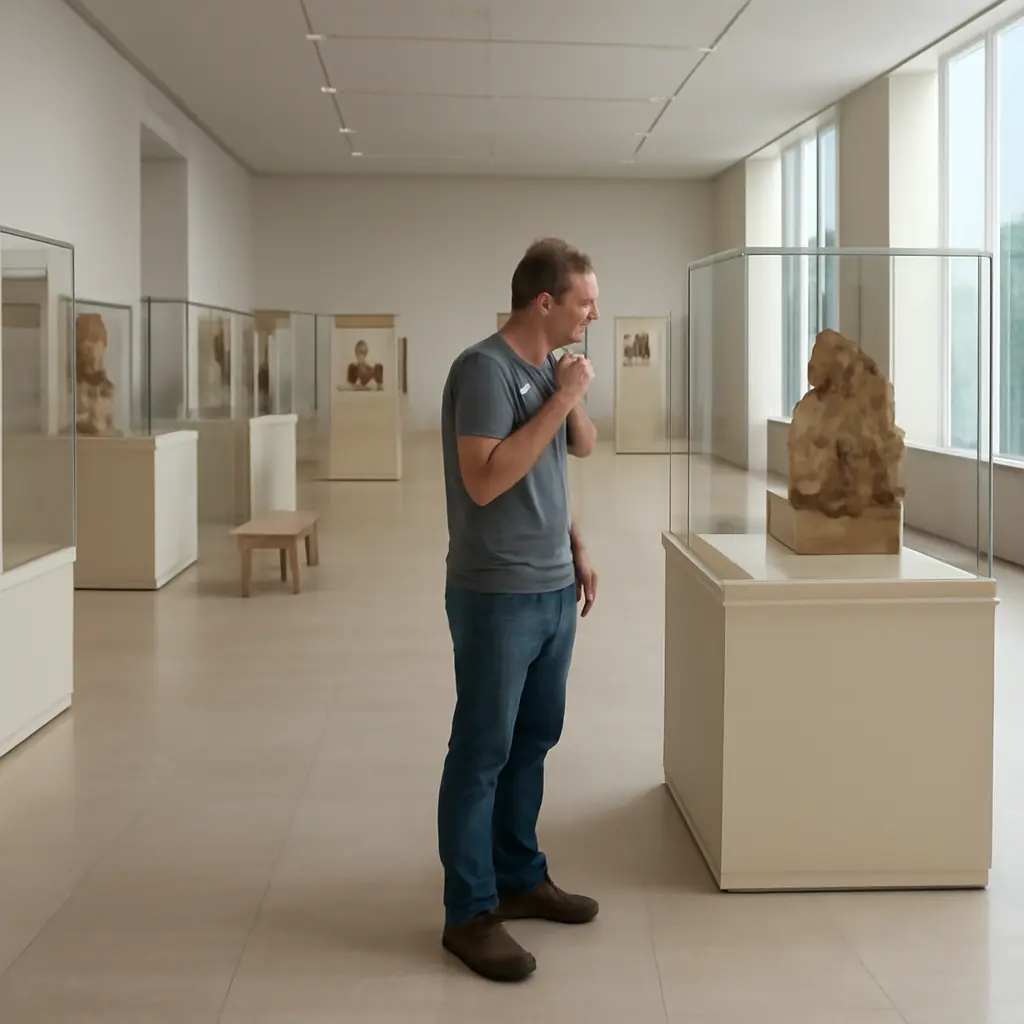
A museum visitor is often imagined as an able-bodied adult who can see, hear, read, move through galleries, and comfortably engage with exhibits. Yet visitors with disabilities—and the people who accompany or support them—are still too often treated as an afterthought in museum planning. The scale of the issue is substantial: the World Health Organization estimates that 1.3 billion people, or about one in six worldwide, experience significant disability. This article examines who gets overlooked, what barriers they face, how museums are responding, and what practical steps can make visits more inclusive.
Museum access and the overlooked visitor
The “museum visitor nobody talks about anymore” is not one single demographic. It is a useful name for people whose needs are routinely missing from the standard visitor profile: disabled people, neurodivergent visitors, people with dementia, visitors with limited English, families with young children, and people who cannot afford admission or travel. Their experiences overlap, but they are not interchangeable. A wheelchair user may encounter a physical barrier; a Deaf visitor may need signed interpretation; a person with sensory sensitivities may need a quieter route or a break space.
The point is not that museums never serve these audiences. Many offer access programs, accommodations, and community partnerships. The problem is that access can remain an optional add-on rather than a basic part of how exhibitions, buildings, communication, and services are designed. That distinction matters because a visitor who cannot enter, understand, or comfortably use a museum is not simply receiving a less polished experience: they may be excluded from cultural participation altogether.
Disability access defines the overlooked museum visitor
Disability access means identifying and removing barriers that prevent disabled people from entering, navigating, understanding, or taking part in a museum. The Smithsonian Institution’s accessibility guidance describes access as a continuing responsibility that includes the built environment, exhibitions, programs, and communication—not merely compliance with a building code. This broader definition recognizes that a ramp may help with entry, but does not by itself make labels readable, audio content accessible, staff interactions respectful, or emergency plans usable by everyone.
The World Health Organization’s estimate of 1.3 billion people with significant disability illustrates why accessibility is not a niche concern. In the United States, the Centers for Disease Control and Prevention reports that more than one in four adults has a disability. These figures cover varied experiences and do not tell us how many people visit museums, but they make clear that disabled people are a major part of the public museums serve.
Accessibility also has close connections to universal design, inclusive interpretation, sensory access, and economic inclusion. These related approaches move the question from “How do we accommodate this one person?” toward “How can the museum work for more people from the outset?”
Physical and mobility access
Physical access concerns whether people can arrive, enter, move through, and use museum spaces. It includes step-free entrances, lifts, accessible toilets, seating, clear circulation routes, reachable interactives, and safe evacuation procedures. Access can fail even in a building with a ramp if galleries have narrow pathways, objects are displayed at inaccessible heights, or seating is scarce for visitors who cannot stand for long periods.
The U.S. Access Board’s accessibility standards set technical requirements for many features of public facilities, including routes and facilities used by people with disabilities. But standards are a baseline, not a substitute for listening to visitors. A practical audit should test the entire journey—from public transport and ticketing to the galleries, café, shop, and exit—with disabled people involved in the process.
Sensory and neurodivergent access
Sensory access addresses how light, sound, crowding, touch, and other stimuli affect a visit. For autistic visitors and others with sensory sensitivities, an echoing room, flashing display, or unpredictable noise can make a gallery difficult to use. Helpful measures may include quiet hours, sensory maps, advance information about busy or intense spaces, ear defenders, low-stimulation routes, and clearly identified places to take a break.
A sensory-friendly session can widen access, but it should not become the only time a neurodivergent person is expected to attend. The Smithsonian’s guidance on accessible programs emphasizes communicating what visitors can expect and providing choices. Museums can apply that principle by publishing practical details before a visit and allowing visitors to decide how, when, and where they engage.
Communication and cognitive access
Communication access means presenting information in ways that different people can perceive and understand. It can include captions, transcripts, audio description, sign-language interpretation, large print, braille, plain-language text, and multilingual material. Cognitive access may also involve uncluttered layouts, clear wayfinding, predictable instructions, and opportunities to revisit information at an individual pace.
The National Endowment for the Arts’ research on arts participation has documented persistent participation differences among people with disabilities, while also showing the importance of accessible opportunities and accommodations. Such findings should prompt museums to ask not only who attends, but who can understand and participate once inside. Digital interpretation should follow the same principle: an online exhibition is not automatically accessible simply because it is available on a screen.
Museum inclusion extends beyond disability
Disability access is central to the overlooked-visitor question, but it is not the whole answer. Museums also exclude people through cost, language, transport, cultural assumptions, and programming that presumes a particular kind of visitor. These barriers can compound: a person may face an inaccessible route, an admission fee, and interpretation available only in a language they do not read.
The American Alliance of Museums has emphasized that museums serve diverse communities and that relevance depends on understanding those communities rather than treating attendance as a simple measure of success. A contextual bridge from physical access to broader inclusion is therefore essential: removing a step at the entrance matters, but so does questioning who feels welcome, whose histories are represented, and whose feedback shapes decisions.
Economic access and the cost of a visit
Economic access includes admission, transport, parking, food, childcare, and the indirect costs of time away from work or caregiving. Free admission can reduce one obstacle, but it cannot resolve every cost or logistical barrier. Museums can improve access through free days, reduced-price programs, transit partnerships, family-friendly facilities, and clear information about all likely expenses before visitors travel.
The Institute of Museum and Library Services tracks museums’ public-serving role across the United States, while attendance and participation surveys from cultural organizations repeatedly show that practical constraints shape who takes part. Because local circumstances differ, museums should examine their own ticketing, transport, and visitor feedback data rather than assume that a single pricing policy reaches everyone.
Language, culture, and representation
Cultural and linguistic inclusion concerns both access to information and the stories a museum chooses to tell. Visitors may be left out when labels rely on specialist vocabulary, translations are absent, or exhibitions present communities only as subjects of study rather than as living partners. Inclusive practice may involve multilingual interpretation, community-led research, consultation with source communities, and transparent acknowledgment of contested histories.
These measures are not simply audience-development techniques. They affect trust and the authority museums claim when interpreting objects and histories. The International Council of Museums’ definition of a museum stresses accessibility, inclusivity, and community participation, providing a professional framework for treating these responsibilities as part of the institution’s purpose.
Families, older adults, and people with hidden needs
Families with infants or young children, older adults, and visitors with non-apparent conditions can encounter needs that standard access plans overlook. These may include stroller routes, changing facilities, places to sit, clear rest-area information, flexible pacing, and staff prepared to respond discreetly. A visitor should not have to disclose a diagnosis to request a reasonable option such as a chair or a quieter place.
Designing for varied ages and circumstances can improve the visit for many people, including those who are temporarily injured, tired, or managing a health condition. This is one reason universal design is valuable: a feature created for a particular access need often benefits a wider audience without erasing the distinct needs that prompted it.
Inclusive museum practice turns access into routine
Inclusive museum practice is the ongoing work of embedding access in planning, budgets, staffing, interpretation, and evaluation. It differs from a one-time accommodation because it anticipates diverse visitors before a problem arises. The strongest approach combines technical standards with lived experience: professional guidance helps establish requirements, while disabled people and community partners reveal where actual visits still break down.
A useful way to assess progress is to map the complete visitor journey. The map should include finding information, arranging travel, purchasing or reserving tickets, entering the building, navigating spaces, engaging with content, taking breaks, using facilities, and leaving safely. It should also consider what happens when a lift is out of service, a gallery becomes crowded, or a visitor needs assistance unexpectedly.
Co-design with visitors and community partners
Co-design means involving people affected by a museum’s decisions in developing and testing those decisions. Rather than asking for feedback only after a project is finished, museums can compensate disabled consultants, community organizations, and visitors for their expertise during early planning. This can prevent avoidable mistakes in exhibition design, digital products, staff training, and public programming.
Consultation must be more than a symbolic meeting. Museums should explain what they changed in response, identify constraints honestly, and continue the relationship after launch. This process supports accountability and helps institutions recognize that access knowledge is expertise—not a favor requested from visitors.
Accessible information before and during a visit
Pre-visit information helps people decide whether and how to attend. A useful access page can describe entrances, lifts, toilets, seating, sensory conditions, captioning, service-animal policies, public transport, and whom to contact. Details should be specific and current; saying only “the museum is accessible” gives visitors little basis for planning.
On-site information should be consistent with what was promised online. Clear signs, maps, staff knowledge, and visible access equipment help visitors act independently. If a feature is unavailable, museums should communicate the change promptly and provide an alternative where possible.
Staff training, measurement, and accountability
Staff training helps turn policies into respectful daily practice. Training can cover disability etiquette, communication options, emergency procedures, and how to offer assistance without assuming what a visitor needs. It should reach front-of-house teams, educators, security staff, curators, digital teams, and senior decision-makers—not just a designated access coordinator.
Museums can measure progress through accessibility audits, visitor feedback, accommodation requests, program participation, and the resolution time for reported barriers. Data should be collected ethically and used to improve services, not to pressure visitors to disclose personal information. A chart comparing barriers reported before and after an access improvement can help show whether a change is working, provided the museum explains how the data were gathered and what they cannot establish.
Conclusion: bring the overlooked museum visitor back into view
The visitor museums risk overlooking is not a rare exception, but a diverse part of the public whose access can be shaped by disability, sensory needs, cost, language, age, and representation. Disability access provides a practical starting point; broader inclusion asks museums to consider the whole visit and the authority behind the stories they tell. With an estimated 1.3 billion people worldwide experiencing significant disability, treating access as routine is both a matter of cultural participation and a sound public-service responsibility.
Museums can begin by auditing the full visitor journey, publishing specific access information, compensating community partners for co-design, training staff, and tracking whether improvements make a measurable difference. Visitors can also help by sharing feedback through accessible channels and asking institutions how their recommendations are acted upon. Further reading from the Smithsonian Institution, the U.S. Access Board, the World Health Organization, and the International Council of Museums can help turn good intentions into sustained practice.
Sources: World Health Organization, “Disability,” https://www.who.int/news-room/fact-sheets/detail/disability-and-health; Centers for Disease Control and Prevention, “Disability Impacts All of Us,” https://www.cdc.gov/disability-and-health/articles-documents/disability-impacts-all-of-us.html; Smithsonian Institution, Accessibility, https://access.si.edu/; U.S. Access Board, ADA Accessibility Standards, https://www.access-board.gov/ada/; National Endowment for the Arts, Arts Participation Patterns in 2022: Highlights from the Survey of Public Participation in the Arts, https://www.arts.gov/impact/research/arts-data-profile-series/adp-34; American Alliance of Museums, Diversity, Equity, Accessibility, and Inclusion, https://www.aam-us.org/programs/diversity-equity-accessibility-and-inclusion/; Institute of Museum and Library Services, Museum Data Files, https://www.imls.gov/research-evaluation/data-collection/museum-data-files; International Council of Museums, Museum Definition, https://icom.museum/en/resources/standards-guidelines/museum-definition/.